

Rs. 8.03 Billion Cardiac Care complex construction begins at Anuradhapura Teaching Hospital
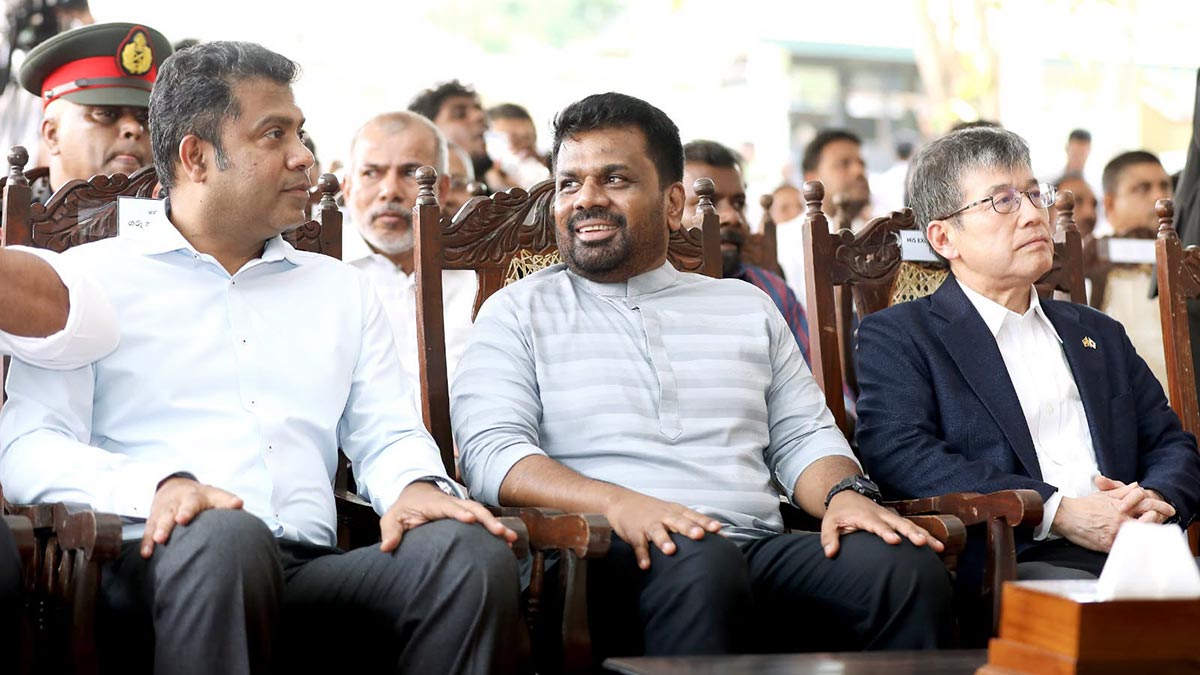
Construction of a new eight-storey Cardiology and Cardiothoracic Surgery Complex at the Anuradhapura Teaching Hospital commenced on September 16, with a total allocation of Rs. 8,035 million for construction and medical equipment.
President Anura Kumara Dissanayake joined the commencement of construction work at the hospital yesterday afternoon.
Of the total allocation, Rs. 3,545 million will be spent on construction with loan assistance from the Japan International Cooperation Agency (JICA), while Rs. 4,490 million has been allocated for equipment.
The new complex will provide free advanced cardiac and cardiothoracic surgical treatment and will include Coronary Care and Intensive Care Units, Catheterisation Laboratories, X-ray and ECG facilities, specialised clinics, wards, laboratories, an auditorium and a library.
Speaking at the event, President Dissanayake said the government is focusing on three key areas to strengthen Sri Lanka’s health sector: bringing free healthcare services closer to the people, introducing advanced medical equipment and medical practices, and establishing an effective management system.
He said the government has launched the “Arogya” programme as part of efforts to bring healthcare services closer to rural communities.
The President also said Sri Lanka cannot continue to depend on outdated medical equipment, technology and practices and must introduce the latest developments in healthcare available around the world.
He said strengthening human resources is another major part of the government’s health sector programme.
According to the President, 3,000 doctors have been recruited for their first internship training during August, September and October, while 64 dental surgeons have also been recruited.
A total of 3,978 personnel have so far been recruited to the nursing staff, while another 2,820 are expected to be recruited by October 31. This would bring the number of new nursing staff recruited during the period to 6,788.
In addition, 4,869 student nurses have been recruited for nursing training, while another 3,000 are expected to enter nursing colleges by January 2027.
The President said 1,860 health assistants have also been recruited, with another 1,100 expected to be recruited by January 2027.
A total of 306 personnel have been recruited for paramedical services, with another 301 undergoing training. Another 1,380 personnel have been recruited for allied health services, while 303 are undergoing training.
President Dissanayake said these measures are aimed at providing the maximum human resources needed to maintain Sri Lanka’s free healthcare service.
He also said several major development projects are being carried out at the Anuradhapura Teaching Hospital.
A medical supplies storage complex valued at more than Rs. 1 billion is among the projects, while Rs. 1,186 million is being spent on an Intensive Care Unit and medical ward complex.
Development projects worth around Rs. 19 billion are also planned to begin at the Anuradhapura Hospital in 2027 and 2028. The President said work worth Rs. 9.7 billion is already underway and that, together with planned and ongoing projects, nearly Rs. 34 billion is being allocated for the development of the hospital.
The President stressed the importance of completing development projects on time, saying delays prevent the public from receiving the intended services and can greatly increase project costs.
As an example, he said a Health Ministry project originally estimated at Rs. 28 billion now has a revised estimate of Rs. 58 billion, resulting in an additional cost of Rs. 30 billion.
He said the economic crisis had contributed to delays in several projects but expressed confidence that the new Cardiology and Cardiothoracic Surgery Complex at the Anuradhapura Teaching Hospital would be completed within 18 months.
The President also referred to the wider economic situation, saying the government’s initial challenge had been to stabilise the economy following the economic crisis. He said the government is now focusing on ensuring that economic improvements result in tangible benefits and better living standards for the public.
He identified transport, education and healthcare as important areas in improving people’s lives and said significant attention was being given to transforming these sectors.
Secretary to the Ministry of Health and Mass Media, Specialist Dr. Anil Jasinghe, said non-communicable diseases account for 80% of deaths in Sri Lanka.
He said high blood pressure and diabetes are major concerns, with only around 50% of people suffering from high blood pressure and around 25% of people with diabetes having their conditions properly controlled.
Dr. Jasinghe said heart attacks are among the most serious complications linked to these conditions and stressed the need for Sri Lanka’s healthcare system to adapt to changes in the country’s population and disease patterns.
He said the government’s healthcare programme includes the development of the “Arogya” programme, Cluster Systems and High-End Care Institutions.
Japanese Ambassador to Sri Lanka Akio Isomata said Japan has a long history of cooperation with Sri Lanka in the healthcare sector and has sought to share its experience in addressing cardiovascular diseases through infrastructure development and training for medical professionals.
He said the project would further strengthen the partnership between Japan and Sri Lanka and that Japan remains ready to support efforts to improve Sri Lanka’s medical infrastructure and develop a sustainable healthcare system.
Minister of Health and Mass Media Dr. Nalinda Jayatissa, Minister of Trade, Commerce and Food Security Wasantha Samarasinghe, Minister of Housing, Construction and Water Supply Dr. Susil Ranasinghe, North Central Province Governor Wasantha Kumara Wimalasiri, Members of Parliament, Secretary to the Ministry of Defence Air Vice Marshal Sampath Thuyacontha (Retired), security forces officials, Health Ministry officials, JICA Sri Lanka Office Chief Representative Shigeo Honzu, and hospital officials and staff were also present.