

Sri Lanka to establish 2,000 primary healthcare centres nationwide
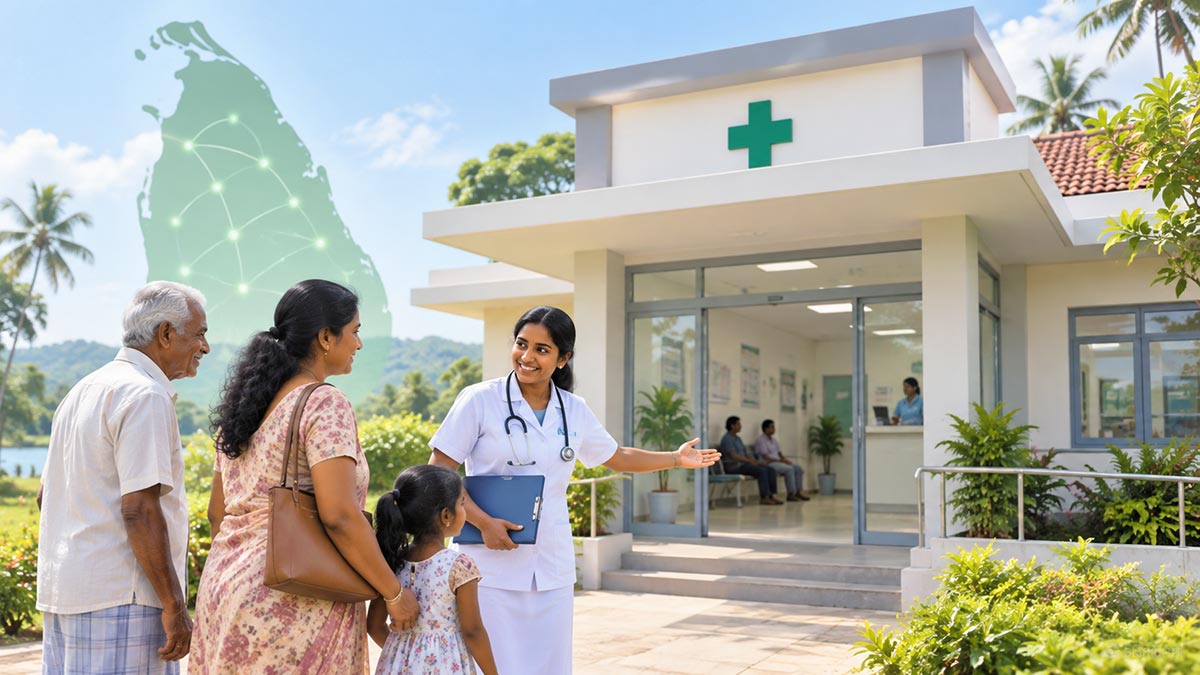
AI-generated image | Image by Onlanka.com
Sri Lanka plans to establish at least 2,000 primary healthcare centres across the country, with one centre serving up to 10,000 people, Health and Mass Media Minister Dr. Nalinda Jayatissa said.
The Minister said the programme is being developed under a healthcare model designed specifically for Sri Lanka, while Rs. 1.5 billion has been allocated for the initiative through this year’s Budget.
Speaking at the Cabinet decisions media briefing held at the Department of Government Information yesterday afternoon (September 15), Dr. Jayatissa said strengthening primary healthcare is one of the government’s main health sector priorities.
He said the approach is in line with the World Health Organization’s 1978 Alma-Ata Declaration and current global healthcare trends. The Minister said Sri Lanka is developing its own model while also considering systems such as India’s AYUSH wellness centres.
Under the programme, existing Category B and C divisional hospitals and Primary Medical Care Units will be brought into the primary healthcare network. Primary Medical Care Units had previously been developed during 2018 and 2019 with World Bank assistance.
A maximum of 10,000 people will initially be assigned to each primary healthcare centre.
Every citizen will also be provided with a Health Number linked to their National Identity Card number, while an E-Health record will be created for them.
The Minister said the aim is to allow people to obtain basic diagnosis and treatment from a primary healthcare centre located within about two to 2.5 kilometres of their homes.
Patients who require further treatment can be referred to secondary or tertiary hospitals. After treatment, they can be directed back to the primary healthcare centre for follow-up care.
Public Health Nursing Officers will also be deployed at the centres. At present, 260 officers have completed their training and are serving in the system, while another 300 are undergoing training. A further 500 are expected to be recruited.
Dr. Jayatissa said that as the number of nursing officers increases, the population covered by each centre could be reduced from 10,000 to around 5,000, allowing services to be provided more efficiently.
Of the Rs. 1.5 billion allocated this year, Rs. 1 billion has been provided to the line ministry and Rs. 500 million to provincial ministries. The Minister said a larger allocation is expected next year.
He said the new system would provide a higher level of service in both quality and capacity compared with the former central dispensary and Primary Medical Care Unit systems.
Considering Sri Lanka’s population of more than 21 million, the country would require at least 2,000 primary healthcare centres, he said.
The government also expects to establish 1,000 new health and wellness centres. Some will be newly constructed, while around 400 existing facilities are expected to be renovated.
Existing maternal and child health clinics, which generally operate once a week or for a few days each month, will also be used for the renovation programme.
The Minister said some areas currently lack adequate office facilities for Family Health Service Officers.
Newly constructed and renovated centres will therefore include adequate maternal health office space for Family Health Service Officers. In a later stage, office facilities will also be provided in other areas where they are currently inadequate.
Dr. Jayatissa said nurses and Family Health Service Officers would not necessarily be attached to the same centre, as maternal and child healthcare services would continue to be provided at village level.
Meanwhile, funds have also been allocated under Budget Proposal No. 41 for construction work at national hospitals, teaching hospitals, district general hospitals and specialised hospitals as part of efforts to develop tertiary healthcare facilities.