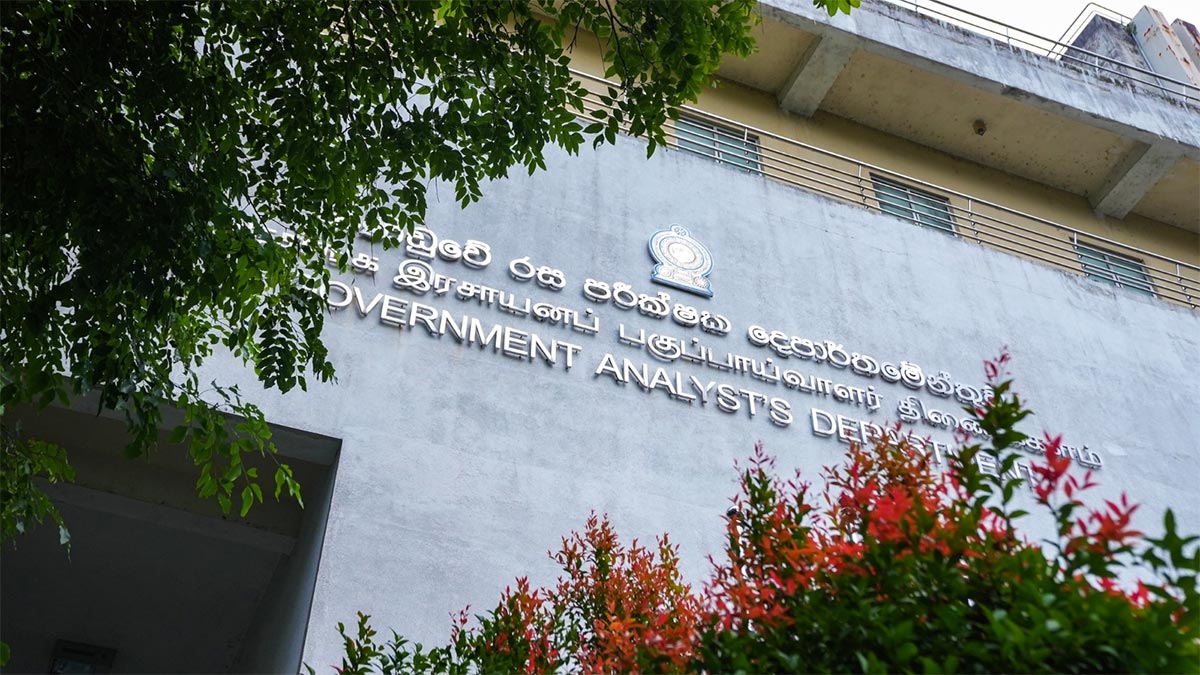

UNDP provides new equipment to boost Sri Lanka’s DNA testing capacity
The United Nations Development Programme (UNDP) has provided new laboratory equipment to strengthen the DNA testing capacity of Sri Lanka’s Government Analyst’s Department and help reduce delays in forensic reports.
The equipment was formally handed over this morning (September 15) at the Government Analyst’s Department on Isuru Mawatha, Battaramulla.
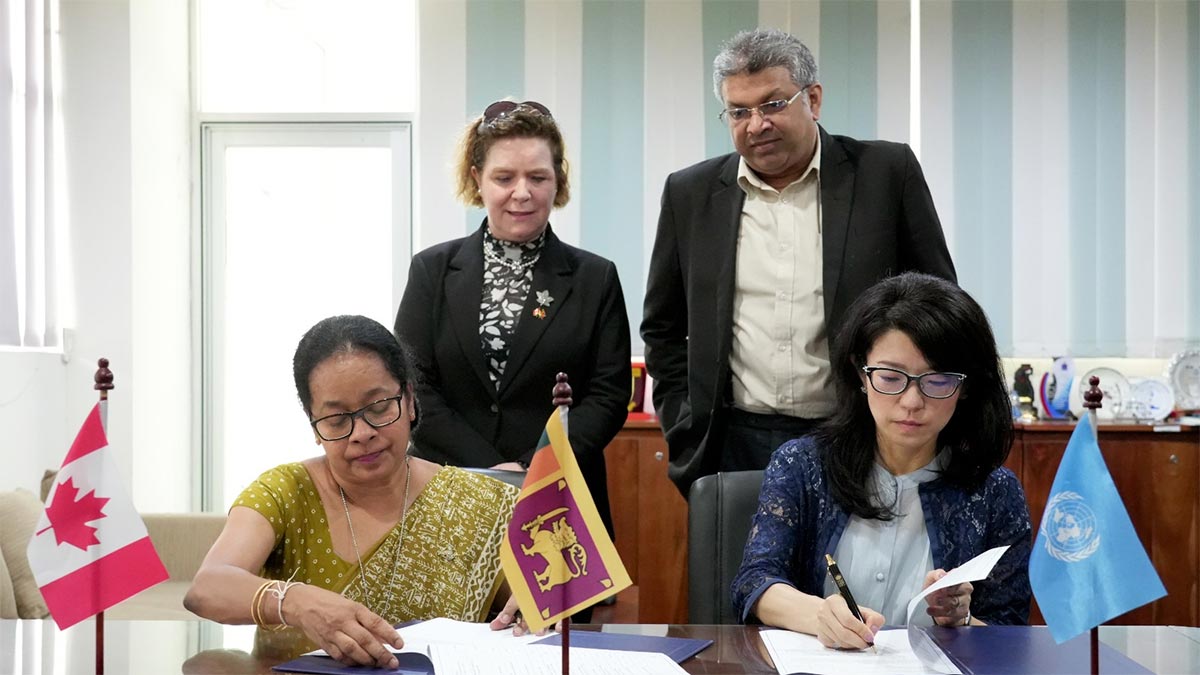
UNDP Resident Representative in Sri Lanka Azusa Kubota handed over the equipment to Acting Government Analyst Kamani Perera in the presence of Minister of Justice and National Integration, Attorney-at-Law Harshana Nanayakkara.
Following an inspection of the equipment, Perera and Kubota signed the relevant agreements confirming the handover.
A special discussion was also held under the chairmanship of Minister Nanayakkara with the participation of Perera, Kubota and Canadian High Commissioner to Sri Lanka Isabelle Martin.
The discussion focused on the progress of issuing forensic reports, the need for modern testing equipment and other facilities required to improve the efficiency of the Government Analyst’s Department.
Speaking at the event, Minister Nanayakkara said delays in issuing forensic reports had become a serious problem in recent years and that formal measures were now being taken to address the issue.
He said there were 118 vacancies in the Department when the present government assumed office, creating serious difficulties in issuing forensic reports efficiently.
The Minister said steps have now been taken to recruit around 70 personnel required by the Department.
He added that officers are working until around 10:00 PM to speed up the issuance of reports, while measures have been introduced to issue reports relating to drugs within less than three months.
Nanayakkara also praised the work carried out by officers of the Government Analyst’s Department.
He said delays in forensic reports had also affected detainees in prisons, with some unable to obtain bail because the required reports had not been issued.
According to the Minister, the government identified the issue last year and began taking measures to address it.
Arrangements have also been made to provide modern machinery and the chemicals required for laboratory testing.
Nanayakkara said that under legislation enacted in 2022, cases involving drugs with a net weight of more than 10 grams required bail applications to be made to the Court of Appeal, which had contributed to delays.
He said steps are now being taken to amend the law so that applications for bail can once again be made to the High Court when the net weight of drugs at the time of arrest is below 100 grams.
The discussion also gave special attention to speeding up DNA testing and providing the additional technical facilities required for this purpose.
The newly provided equipment includes an RT-PCR machine, a PCR system and several Crime-Lite Serology Kits, among other items.
The programme is funded by the Government of Canada and jointly implemented by UNDP and the United Nations Population Fund (UNFPA) Sri Lanka.
According to the Ministry, the new equipment is expected to strengthen the scientific basis of the judicial process by improving the accurate identification and analysis of biological evidence.
It is also expected to improve the accuracy, reliability and evidentiary strength of forensic DNA analysis while helping reduce delays in Sri Lanka’s judicial system.