

Justice Minister rejects claims that new Organised Crime Bill targets tattoos and hairstyles
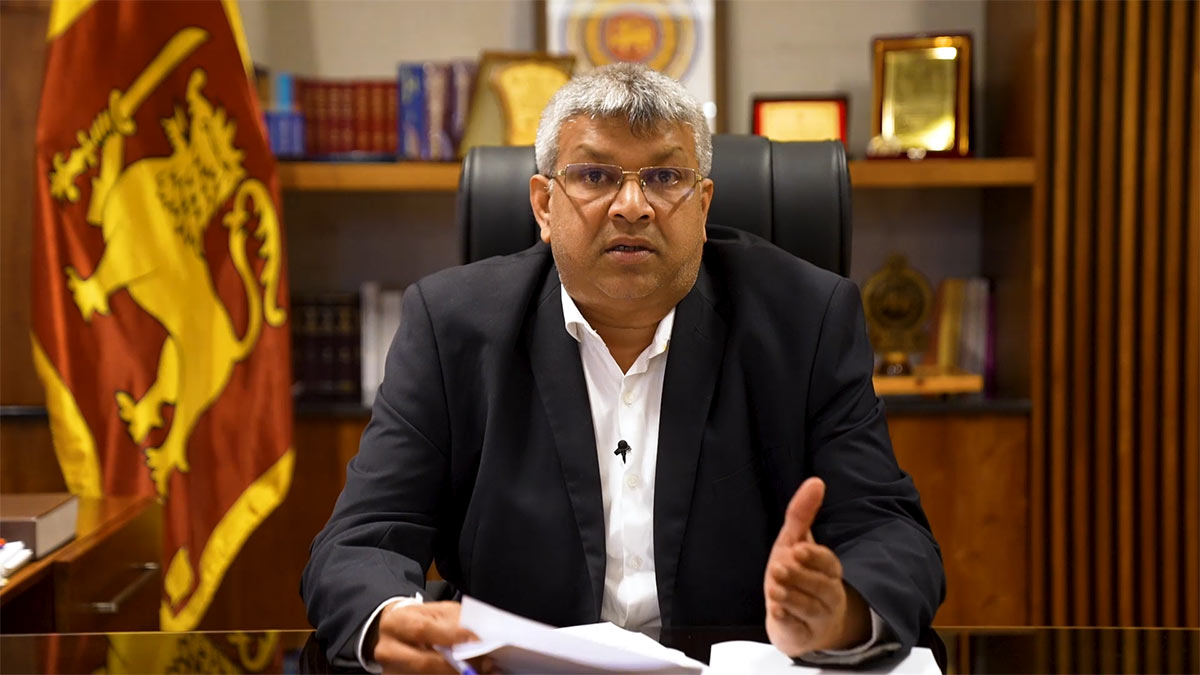
Minister of Justice and National Integration, Attorney-at-Law Harshana Nanayakkara | FILE PHOTO
Justice Minister Harshana Nanayakkara has rejected claims that Sri Lanka’s proposed Organised Crime Prevention Bill would criminalise tattoos, long hair or certain clothing, saying the legislation is intended to identify and punish members of organised criminal gangs.
The Minister of Justice and National Integration made these remarks while participating in the debate on an opposition adjournment motion on the current situation in the country in Parliament on October 20.
The first reading of the Organised Crime Prevention Bill was presented to Parliament on the same day. The Minister said he had decided to clarify the purpose of the proposed law because misleading interpretations were being circulated on Facebook and other social media platforms.
He said some social media posts claimed that people could be imprisoned for growing long hair or getting tattoos under the proposed legislation.
Nanayakkara explained that Clause 4(1) of the Bill deals with membership of an organised crime group, while Clause 4(2) sets out 12 factors that may be considered when determining whether a person belongs to such a group.
He said Clause 4(2)(c) refers to whether a person uses clothing, fashion styles, hand gestures, language or tattoos associated with notorious members of an organised crime group.
According to the Minister, the provision is being misrepresented by deliberately leaving out the reference to notorious members of organised criminal groups.
He stressed that the Bill is aimed at identifying people operating as members of organised criminal groups, not ordinary citizens who choose particular hairstyles, clothes or tattoos.
The Minister explained that criminal gangs in countries such as Japan, the United States, Australia and Singapore sometimes use specific tattoos, clothing styles and hand gestures to identify their membership or status. Investigators in different countries use such signs as factors when determining whether a person is connected to a criminal organisation.
He said the provision had been included to address possible future developments, even though such practices had not been identified as common in Sri Lanka. He added that the relevant section had been adopted from Singapore’s Organised Crime Act and was based on an internationally accepted definition.
Nanayakkara said the Government had decided to introduce new legislation because existing laws were not sufficient to deal with organised crime. He pointed to the continuing problems of drug trafficking, the distribution of ‘Ice’ (crystal methamphetamine), murders, abductions, property damage and harm caused to individuals.
He said the Government had made a policy decision to tackle organised criminal activities alongside corruption and fraud. The proposed law is intended to provide the necessary legal provisions to investigate, prosecute and punish crimes committed by organised underworld gangs.
The Minister also referred to the President’s commitment to tackling underworld activities and criminality, saying the Government had promised to introduce new laws where existing legislation was inadequate.
He rejected claims that the proposed law would allow police to arrest people simply because of their hairstyles, tattoos or clothing, or detain anyone for days without proper grounds. He described such claims as false and misleading.
“Wearing clothes you like, getting a tattoo, or keeping a hairstyle you desire is your fundamental right,” he said, adding that the word ‘hair’ did not appear in the Bill.
Nanayakkara said the Government welcomed criticism of its proposed legislation and challenges before the Supreme Court, explaining that such scrutiny could help strengthen the law and ensure that it served the public.
He urged those who believed the Bill was incorrect or unconstitutional to challenge it before the Supreme Court rather than spread misleading information on social media.
The Minister accused certain political parties of using distorted interpretations of the Bill to create public fear for political purposes. He said the Government was prepared for a proper debate on the proposed law and called on critics to use their knowledge and expertise to benefit the public.
He added that the legislation was being introduced to protect the country and its people by suppressing organised crime, and said ordinary citizens had no reason to fear the provisions relating to clothing, tattoos or hairstyles.