

President reviews lower Malwathu Oya project as 60% of main dam completed
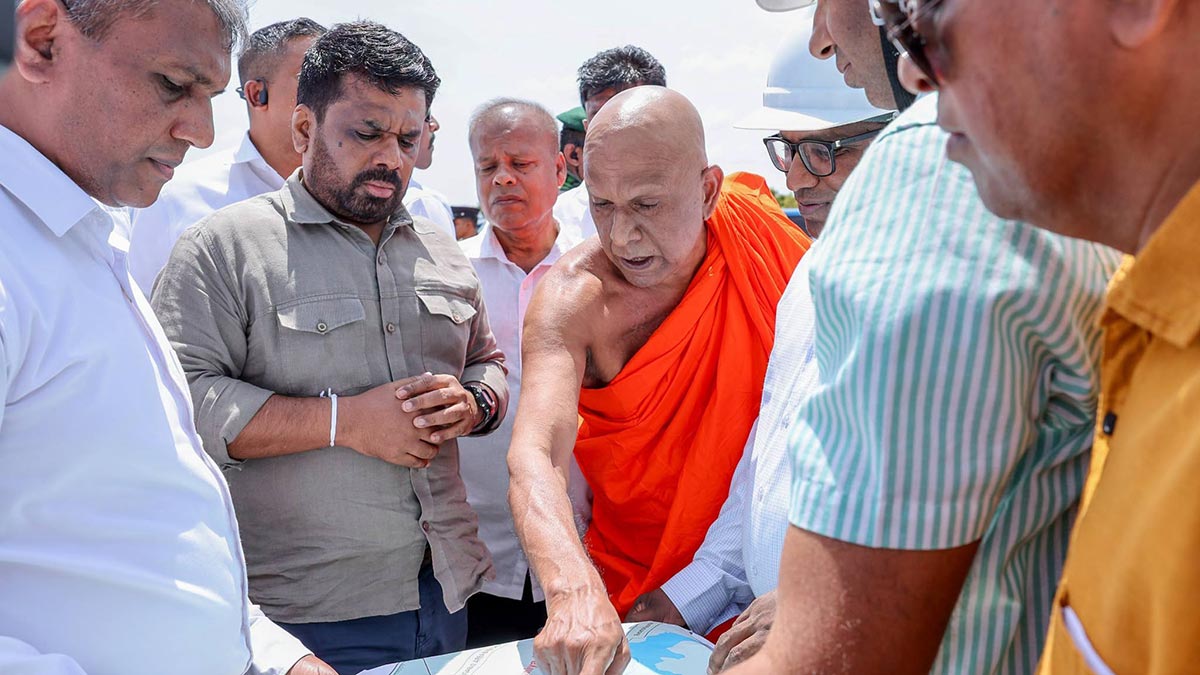
President Anura Kumara Dissanayake inspected the Lower Malwathu Oya Multi-Purpose Development Project on August 29, 2026 where about 60% of the 3.4-kilometre main dam has now been completed.
The project, which began around 10 years ago, was later stalled due to various reasons. Work has now resumed under the present Government, with Rs. 5 billion allocated for the project in 2026.
The Government expects to complete the project by the end of 2029. The project is being carried out entirely with domestic funding, while steps have been taken to address issues that had delayed construction.
The Lower Malwathu Oya Reservoir is being built by damming the Malwathu Oya at Bogoda in Thanthirimale, connecting the Anuradhapura District in the North Central Province with the Vavuniya District in the Northern Province.
The reservoir will have a storage capacity of 169,400 acre-feet and is expected to become the largest reservoir in the North Central Province upon completion.
According to the President’s Media Division, the project is expected to provide a long-term solution to drinking water needs in the Anuradhapura, Vavuniya and Mannar districts. It is also intended to provide water for agriculture and rural development in the lower Malwathu Oya basin, establish a new development zone in Thanthirimale, generate hydroelectricity, help control floods and support tourism and freshwater fisheries.
Around 40,000 acres of paddy land in the Sahal Neliya area of the Mannar District, under the Yodha Wewa and Akathimuruppu Wewa irrigation schemes, are currently cultivated during the Maha season.
However, due to water shortages, only about 10,000 acres are cultivated during the Yala season. Once the reservoir is completed, the Government expects all 40,000 acres to be cultivated during both the Yala and Maha seasons.
During the inspection, President Dissanayake held discussions with project officials and reviewed the progress of construction as well as issues, challenges and requirements connected with the project.
He instructed officials to expedite construction and ensure that the benefits of the project are provided to the public without unnecessary delay.
The President also reviewed arrangements for 315 families who are expected to be displaced by the project.
He instructed officials to provide the affected families with land and houses with electricity and drinking water facilities. He also directed that they be supported to engage in smart agricultural practices on the allocated land using solar-powered lift irrigation systems.
Project officials informed the President that approximately 60% of construction work on the 3.4-kilometre main dam has been completed, while the structural components of the right-bank sluice have also been completed.
A power plant is also being constructed under the project, with foundation excavation and rock-blasting work already underway.
Other work includes the construction of an elephant fence, rehabilitation of minor tanks and the establishment of an archaeological museum.
The Chief Incumbent of the historic Thanthirimale Rajamaha Viharaya and Deputy Chief Sanghanayake of the Northern and Eastern Provinces, Ven. Thanthirimale Chandrarathana Nayaka Thero, was also present during the visit.
He said no previous Head of State had given such close attention to the project and praised the President for monitoring its progress and providing guidance. He also expressed appreciation for the President’s support towards completing the project and offered his blessings for future activities.
Minister of Trade, Commerce, Food Security and Cooperative Development Wasantha Samarasinghe, Minister of Housing, Construction and Water Supply Susil Ranasinghe, Members of Parliament Professor Sena Nanayakkara and Susantha Navaratne, representatives of the Maha Vilachchiya Pradeshiya Sabha, other public representatives and government officials were also present.
Project officials, including Chief Project Director Anura Nelugolla, also participated in the inspection.