

Speaker endorses three laws to strengthen Sri Lanka’s fight against financial crime
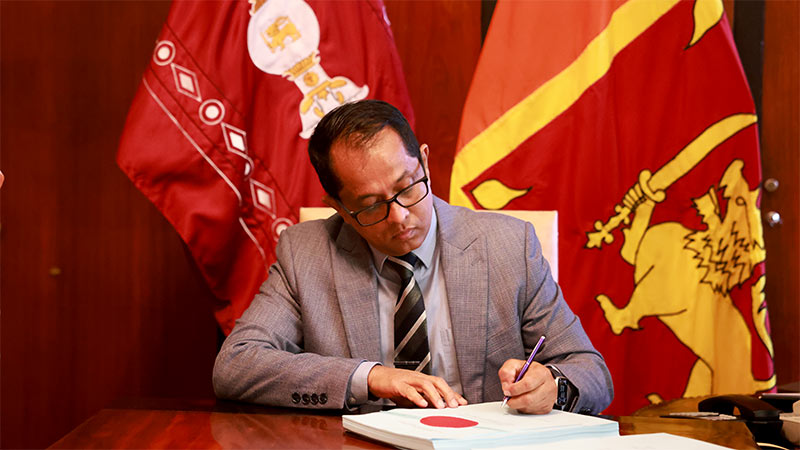
Speaker Dr. Jagath Wickramaratne
Sri Lanka Speaker Dr. Jagath Wickramaratne has endorsed three laws aimed at strengthening action against money laundering, terrorist financing and financial crimes.
The Speaker endorsed the Prevention of Money Laundering (Amendment) Bill, the Financial Transactions Reporting (Amendment) Bill and the Convention on the Suppression of Terrorist Financing (Amendment) Bill today (August 4).
Following the endorsement, the three Bills came into force as the Prevention of Money Laundering (Amendment) Act, No. 16 of 2026, the Financial Transactions Reporting (Amendment) Act, No. 17 of 2026 and the Convention on the Suppression of Terrorist Financing (Amendment) Act, No. 18 of 2026, respectively.
The Prevention of Money Laundering (Amendment) Bill was passed by Parliament on July 9, 2026, with a special majority, in accordance with the Supreme Court’s determination relating to Clause 14.
The Financial Transactions Reporting (Amendment) Bill was passed with amendments, while the Convention on the Suppression of Terrorist Financing (Amendment) Bill was passed without amendments.
The amendments to the Prevention of Money Laundering Act are intended to strengthen Sri Lanka’s legal framework against money laundering, improve financial crime investigations and bring the country’s laws in line with international standards.
The new provisions expand the scope of money laundering offences and allow legal proceedings to be started even when there has been no conviction for the related underlying, or predicate, offence.
They also strengthen temporary freezing orders over suspected assets, asset management procedures and provisions covering the management and disposal of restrained property.
The law further strengthens the confiscation of criminal property, expands investigative powers, improves international cooperation and increases penalties for money laundering offences.
Meanwhile, the Financial Transactions Reporting amendments are intended to improve Sri Lanka’s compliance with international standards on preventing money laundering, terrorist financing and the financing of the proliferation of weapons of mass destruction.
The amendments formalise requirements relating to risk-based procedures and customer due diligence and expand the responsibilities placed on institutions required to report financial transactions.
Virtual Asset Service Providers, known as VASPs, will also be included within the definition of a “financial business” under the Financial Transactions Reporting Act, No. 6 of 2006, subject to any other applicable written law.
The amendments also introduce provisions relating to the establishment of the Financial Intelligence Unit and strengthen its powers, functions and responsibilities.
The period for which a transaction may be suspended will be extended from seven days to 14 working days.
Administrative sanctions available against reporting institutions that fail to comply with the law will also be expanded.
The law provides for the establishment of a National Committee on Anti-Money Laundering, Countering the Financing of Terrorism and Countering the Financing of the Proliferation of Weapons of Mass Destruction.
It also strengthens targeted financial sanctions imposed under United Nations Security Council resolutions relating to terrorism, terrorist financing and the financing of the proliferation of weapons of mass destruction.
New definitions and interpretations have been introduced to improve the clarity of the law, while inconsistencies between the Sinhala and English texts of the Financial Transactions Reporting Act will also be corrected.
The amendments to the Convention on the Suppression of Terrorist Financing Act, No. 25 of 2005, are intended to further strengthen Sri Lanka’s legal framework against terrorist financing.
They will bring Sri Lanka’s legal measures further in line with international standards and United Nations conventions and support the country’s preparations for its forthcoming Mutual Evaluation.
Parliament said the reforms would help protect the integrity of Sri Lanka’s financial system, strengthen national security and reaffirm the country’s commitment to its international obligations under the Financial Action Task Force framework.