

Sri Lanka Climate Parliament Caucus calls for anticipatory crisis governance to tackle climate risks
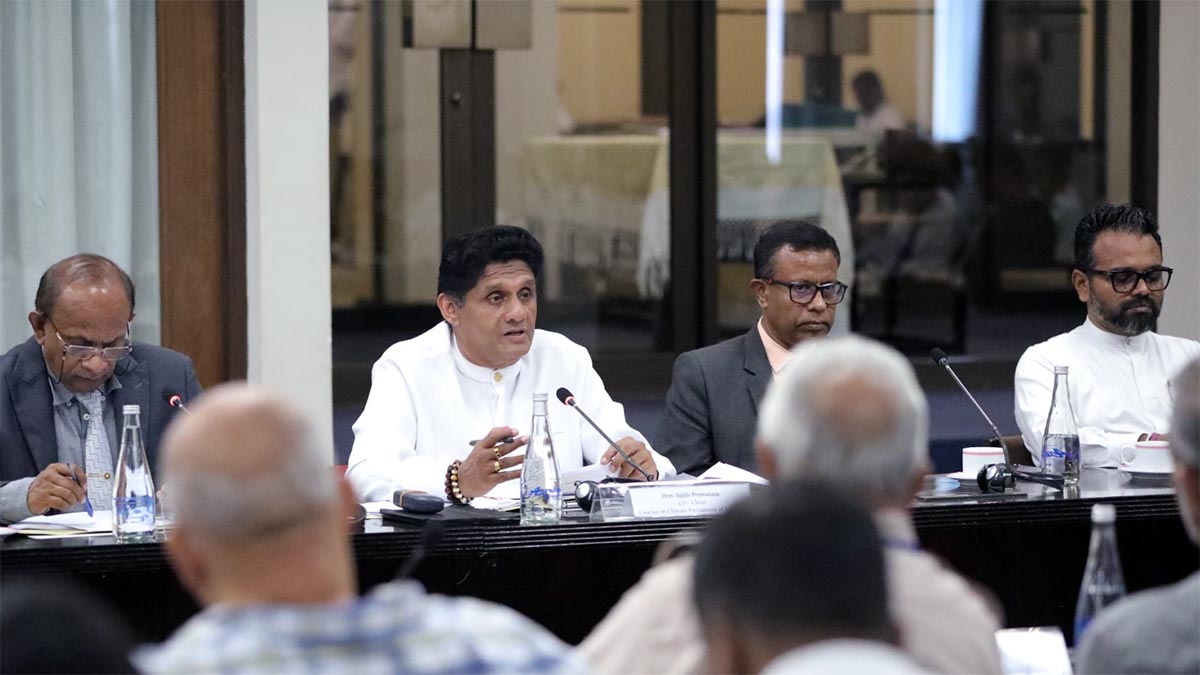
The Caucus on Climate Parliament of Sri Lanka has called for an Anticipatory Crisis Governance system to strengthen the country’s preparedness for climate change, including risks linked to El Niño conditions.
The proposal was discussed at a recent meeting held in Parliament under the joint chairmanship of Leader of the Opposition Sajith Premadasa and Member of Parliament Prof. L.M. Abeywickrema.
The meeting focused on climate change, El Niño conditions, agriculture, water management, wildlife conservation, human-elephant conflict, disaster management and environmental management.
Delivering the main expert presentation, Prof. Charitha Pattiarachchi, Winthrop Professor of Coastal Oceanography at the University of Western Australia, stressed the importance of early preparedness for climate risks, science-based policymaking and stronger disaster management systems.
The disaster management model followed by the Indian state of Odisha was also discussed. Participants were informed that during a cyclone in 2019, Odisha was able to evacuate around one million people to safe locations within 24 hours.
Dr. Sumith Pilapitiya, Chairman of the Subcommittee on Human-Elephant Conflict, presented an interim report highlighting how climate conditions could worsen human-elephant conflict.
The report proposed short- and long-term measures, including community-based electric fences, seasonal fencing around paddy fields, wildlife habitat management and improved water management.
Prof. Sampath Seneviratne, Chairman of the Independent Expert Advisory Group on El Niño Resilience, also presented an interim report analysing the impact of climate change on agriculture, biodiversity, water security and the rural economy.
The report proposed a Strategic Climate Resilience Framework based on scientific evidence.
Discussions on wildlife conservation focused on addressing the shortage of veterinary officers, strengthening wildlife management and reducing environmental damage caused by human activities, plastics and waste in and around national parks.
Proposals were also made to reduce environmental impacts in sensitive sacred areas, introduce a differential pricing system for the tourism sector and develop infrastructure in national parks.
The meeting stressed that Sri Lanka should move beyond responding to crises after they occur and strengthen science-based policies, coordination between institutions and early-preparedness mechanisms to improve the country’s resilience to climate change.
Members of Parliament, government officials, representatives of international organizations and development partners, researchers, youth representatives and representatives of civil society organizations participated in the meeting.