
Sri Lanka begins jet fuel pipeline and new storage tank projects
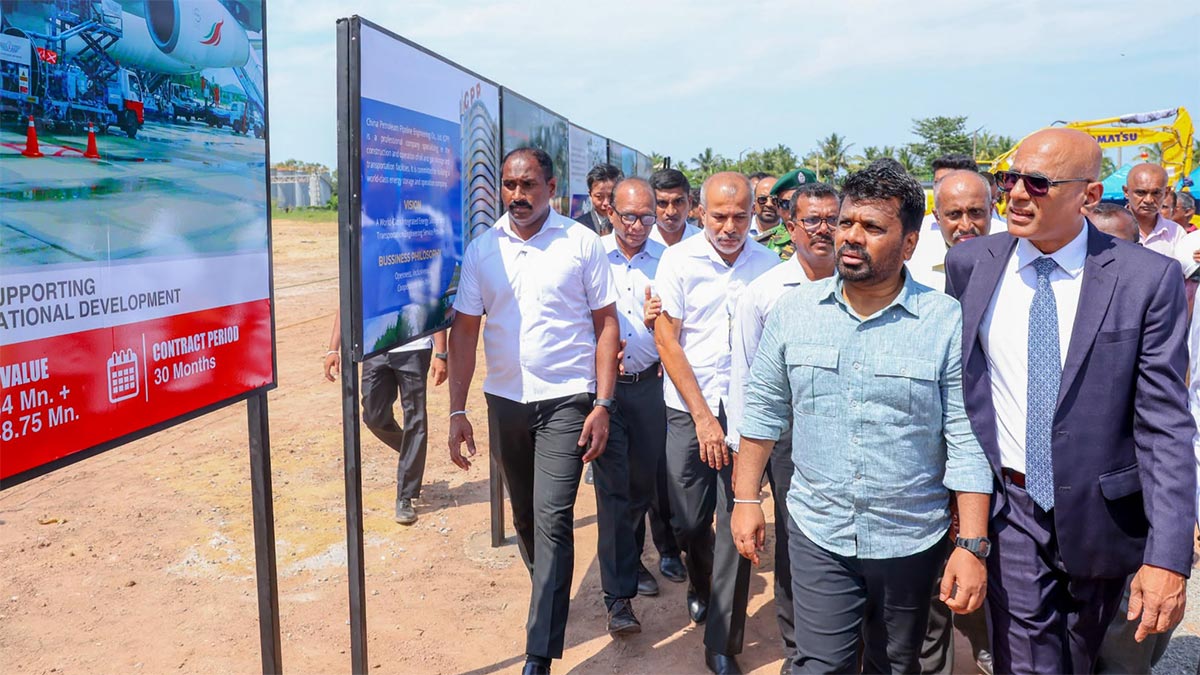
Construction of a 21-kilometre Jet A-1 fuel pipeline from Muthurajawela to Katunayake and eight new fuel storage tanks with a combined capacity of 132,000 cubic metres began today (October 2).
President Anura Kumara Dissanayake attended the launch of the projects, which are being carried out by the Ceylon Petroleum Corporation (CPC) and the Ceylon Petroleum Storage Terminals Limited (CPSTL).
The projects are aimed at strengthening Sri Lanka’s energy infrastructure, improving aviation fuel supply security, reducing transportation costs and providing additional capacity to meet future fuel demand.
Under the CPC project, five new Jet A-1 fuel storage tanks with a total capacity of 92,000 cubic metres will be constructed at Muthurajawela. They include two tanks with a capacity of 30,000 cubic metres each, two tanks of 15,000 cubic metres each and another tank with a capacity of 2,000 cubic metres.
A 21-kilometre underground pipeline with a diameter of 10 inches will connect the Muthurajawela tank complex directly to Bandaranaike International Airport in Katunayake. The project is expected to be completed within 30 months.
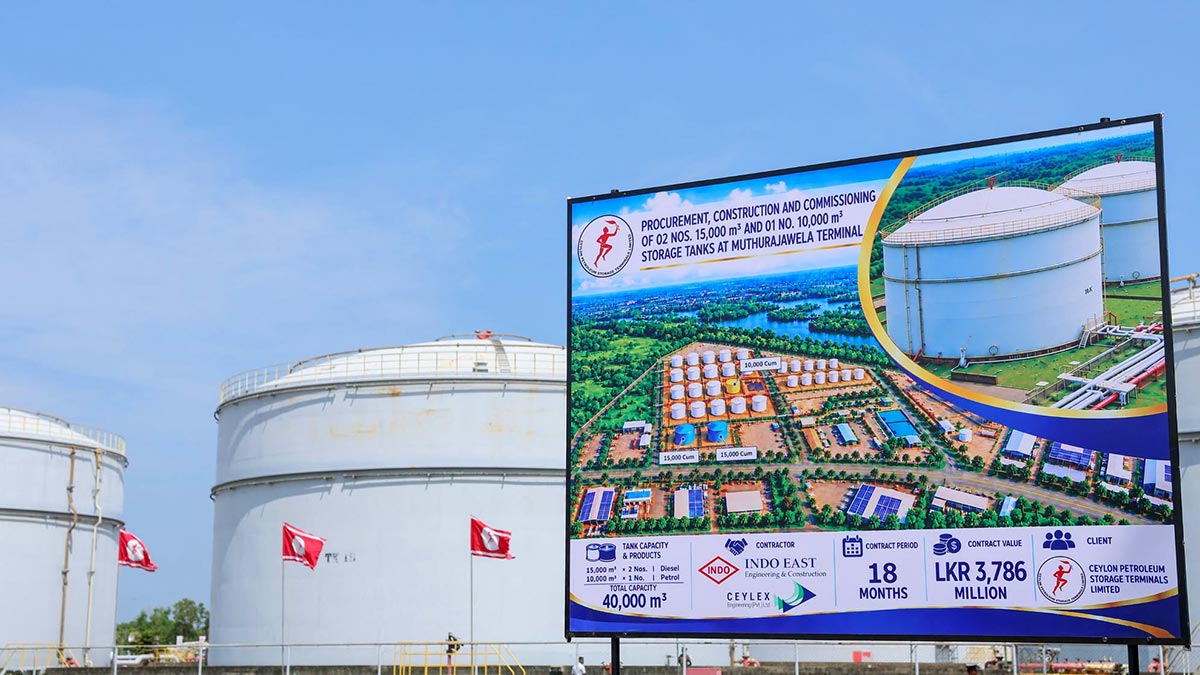
Meanwhile, CPSTL began construction of three additional petroleum storage tanks at the Muthurajawela Terminal. Two tanks will each have a capacity of 15,000 cubic metres, while the third will have a capacity of 10,000 cubic metres, providing an additional 40,000 cubic metres of storage.
The CPSTL project has an 18-month contractual period and is scheduled for completion in April 2028. According to the President’s Media Division (PMD), the tanks will be built in line with relevant international standards and recognised industry practices to improve safety, reliability and operational efficiency.
The additional capacity is expected to strengthen the country’s fuel reserves, improve operational flexibility and support reliable and uninterrupted fuel distribution.
Addressing the event, President Dissanayake said the Government wants to maintain a strong state presence in the energy market while ensuring that state institutions provide an efficient service to the public.
He said the CPC had previously accumulated debt of Rs. 840 billion, placing significant pressure on state banks and contributing to calls for state institutions to be privatised. However, he said the Government believes the state should retain a leading share of the energy sector while improving the efficiency of those institutions.
The President said political recruitment to state institutions had been stopped during the past two years and that only essential employees had been recruited for ongoing projects. He said the Government aims to operate energy institutions on a professional basis without political interference.
He also said CPC’s share of Sri Lanka’s diesel market had increased from around 58% to 74% last month, claiming that private suppliers had been unable to compete with CPC’s prices and had reduced their fuel supplies.
According to the President, CPC recorded a profit of Rs. 36 billion last year and Rs. 28 billion so far this year, while CPSTL recorded a profit of Rs. 3.5 billion last year.
President Dissanayake said Sri Lanka currently has fuel storage capacity sufficient for only around 23 to 25 days and that increasing this capacity is a major part of strengthening national energy security.
He said pipeline and storage projects are being implemented to increase fuel reserves to cover at least 45 days, or around one and a half months, while also reducing the time required to unload fuel.
The President also outlined measures taken by the Government to reduce the impact of higher global fuel prices on consumers.
He said the Treasury provided a fuel subsidy of Rs. 60 billion for five months from April, bearing a cost equivalent to Rs. 100 per litre of diesel and Rs. 20 per litre of petrol.
Following another increase in global prices in September, he said diesel should have increased by Rs. 80 per litre from October 1, but the price was increased by only Rs. 10, with the Treasury bearing the remaining Rs. 70.
The President said a further Rs. 41 billion had been allocated for October, November and December. He added that CPC and CPSTL should not be required to sell fuel below cost and that when the Government decides to keep prices below the level calculated under the pricing formula, the Treasury should bear the difference.
He also announced plans to hold discussions with the Ministry of Digital Economy next week on developing a digital mechanism to provide fuel subsidies only to sectors identified as having a genuine need.
These would include public transport, agricultural machinery, fishing vessels and lorries transporting vegetables. The President said the current general subsidy system could result in people with larger, higher-fuel-consuming vehicles receiving a greater benefit.
President Dissanayake also said Sri Lanka had earned US$384 million so far this year from supplying fuel to aircraft. He said a new US$800 million project is expected to begin in November to expand passenger capacity at Bandaranaike International Airport.
Minister of Ports and Civil Aviation and Minister of Energy Anura Karunathilaka said Sri Lanka is entering an era of energy transition as the world increasingly moves towards clean energy.
He said the Government expects to add 1,200 megawatts of solar power capacity to the national grid by 2029 and stressed the importance of expanding the use of electric vehicles.
The Minister said Sri Lanka should focus not only on controlling fuel prices but also on controlling fuel consumption. He said changes in energy consumption patterns, greater use of electricity and fuel-efficient vehicles could help strengthen the country’s energy security.
CPC Chairman D. J. Rajakaruna said the Corporation had faced major challenges due to the war in the Middle East. According to him, while diesel prices in the global market had increased by 91%, the increase in Sri Lanka was around 39.5%, while an 80% increase in global petrol prices had resulted in an increase of around 41% locally.
Rajakaruna said CPC profits were being used to finance infrastructure projects rather than being used only to reduce fuel prices.
These projects include increasing fuel storage capacity through 11 tanks, including six tanks that had previously been abandoned, and modernising the CPC’s oil-filling section, which is more than 90 years old.
The CPC is also establishing a gantry system similar to the one at Muthurajawela, laying two new pipelines to unload fuel from the port to Kolonnawa, constructing the new Jet A-1 pipeline to Katunayake and upgrading existing pipeline systems.
Minister of Science and Technology Professor Chrishantha Abeysena, Deputy Minister of Energy Arkam Ilyas, MP Kumara Jayakody, Secretary to the Ministry of Energy and Senior Additional Secretary to the President Russell Aponso, foreign ambassadors, government officials, CPC and Energy Ministry officials and representatives of Sinopec were also present at the event.