

Sri Lanka National Council acts on Cyclone Ditwah and disaster risks
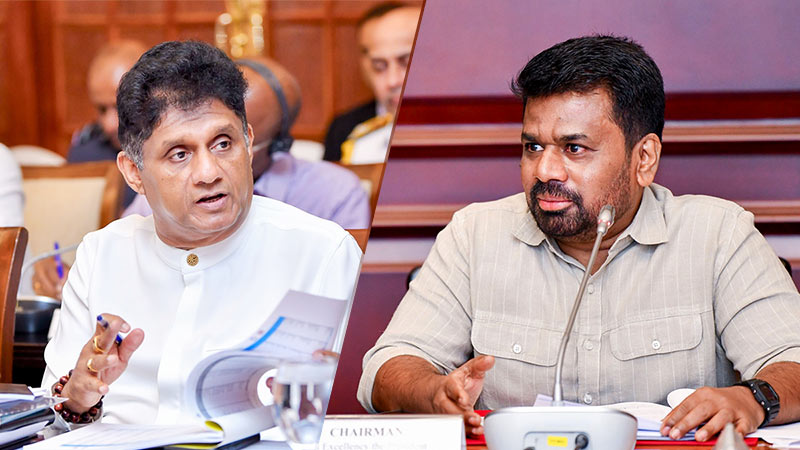
The 16th meeting of the National Council for Disaster Management was held this morning (December 15) at the Presidential Secretariat in Colombo under the leadership of Sri Lanka President Anura Kumara Dissanayake.
During the meeting, a Cabinet Memorandum was presented on the establishment of a National Integrated Disaster Management Mechanism and proposed amendments to the Sri Lanka Disaster Management Act, No. 13 of 2005.
The Council discussed reducing landslide risks in plantation areas through a multi-stakeholder approach. The National Building Research Organisation (NBRO) was tasked with coordinating relevant stakeholders, plantation companies, and local authorities to provide recommendations and create a certification mechanism for activities such as the construction and rehabilitation of drainage systems.
A Central Fragile Area Management Plan was also discussed. This plan will include the appointment of technical committees, consolidation of data from relevant institutions, and the development of a unified digital platform to allow shared access to information across agencies.
To ensure transparency in foreign relief coordination, the Council approved the establishment of a Foreign Aid Coordination Committee and granted it the necessary powers.
The Council had previously met on August 7, 2025 after a seven-year gap and again on November 27, 2025 in response to an emergency disaster situation. Today’s meeting focused on policy decisions and institutional guidance to restore normalcy following Cyclone Ditwah.
The Director General of the Disaster Management Centre reported that approximately 2.2 million people were affected by Cyclone Ditwah. So far, 6,164 houses were fully damaged and 112,110 partially damaged. As of December 14, 2025, 72,911 people were residing in 796 safe shelters. The Council held extensive discussions on ongoing relief programmes, resettlement, and livelihood restoration.
President Dissanayake stated that under the Government’s programme to protect the Central Highlands, 15,000 houses in high-risk zones have been identified. He added that the Government aims to construct 8,000 new houses for affected families by the end of 2026.
The meeting also addressed delays in the disbursement of the Rs. 25,000 allowance for cleaning flood-affected houses. The President instructed officials to resolve the issues and complete payments within this week.
Both the President and the Leader of the Opposition highlighted the need for a structured and systematic process for data collection and updating. A legal framework to support this process was also discussed, with the President calling for practical solutions within the next three years.
Secretary to the Ministry of Finance, Dr. Harshana Suriyapperuma, shared that during the 2016 floods, the Government paid Rs. 7.51 billion in compensation while receiving only Rs. 1.42 billion from reinsurance, resulting in a net loss of Rs. 5.79 billion to the State. The President emphasized that any future insurance scheme must be financially sustainable while providing maximum protection, and decisions should follow expert advice and critical reforms.
Prime Minister Dr. Harini Amarasuriya, Leader of the Opposition Sajith Premadasa, ministers, governors, and other government officials attended the meeting.