

Sri Lanka records over 1,000 dengue cases in a day as hospitals face severe strain
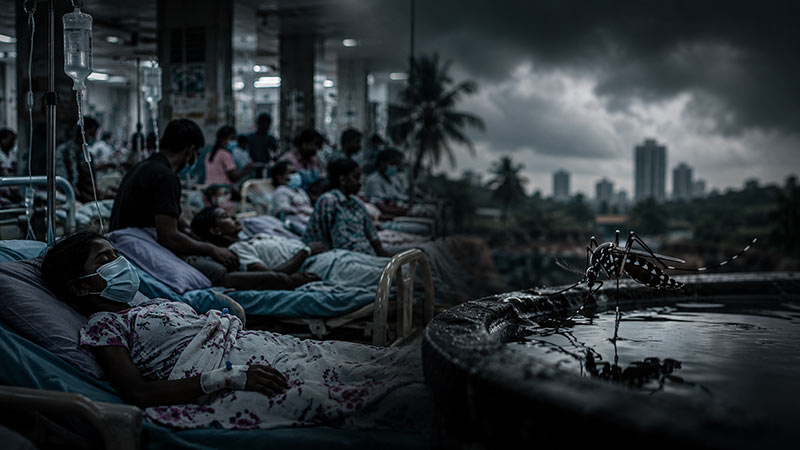
AI-generated image
Sri Lanka recorded 1,069 dengue cases within the past 24 hours, pushing the total number of infections reported this year to 47,179, as health authorities warn that hospitals are coming under severe pressure due to the rapid spread of the disease.
The National Dengue Control Unit (NDCU) said the total number of dengue-related deaths reported so far this year stands at 28.
Acting Director of the NDCU, Dr. Kapila Kannangara, stated that Sri Lanka usually records between 150 and 200 dengue cases per day during non-epidemic periods. However, following the current high-risk situation, daily case numbers had increased to around 600 to 650 before exceeding 1,000 cases yesterday.
He warned that the number of reported infections continues to rise and stressed the need for urgent measures to bring the situation under control.
According to Dr. Kannangara, the growing number of patients has already exceeded the capacity of several hospitals. He cautioned that if the trend continues, there is a serious risk of the hospital system facing collapse due to the overwhelming demand for treatment.
He further noted that doctors, nurses, and other healthcare workers are experiencing significant mental and physical strain while caring for the increasing number of patients. The stressful conditions, he said, could contribute to a rise in dengue-related deaths in the future.
Dr. Kannangara also pointed out that the crisis affects not only dengue patients but also those seeking treatment for other illnesses, as overcrowded hospitals place additional pressure on the healthcare system.
Meanwhile, a special discussion on the mosquito control programme is scheduled to be held today (June 22) under the Clean Sri Lanka initiative. The meeting will be chaired by President’s Secretary Dr. Nandika Sanath Kumanayake, with all stakeholders in the health sector invited to participate.
The National Dengue Control Unit has identified 112 Medical Officer of Health (MOH) divisions as high-risk dengue areas across the country.
The highest spread of dengue continues to be reported from the Maharagama MOH division. Rapid increases in cases have also been recorded in the districts of Matara, Galle, and Ratnapura, as well as in the Panadura MOH division in Kalutara District and the Biyagama MOH division in Gampaha District.
Dr. Kannangara said that, in addition to hospitals in Colombo and Gampaha districts, healthcare facilities in Matara District have also reached their maximum capacity for treating dengue patients.
The NDCU noted that the 47,179 cases reported so far this year represent a clear increase compared to the corresponding figures recorded in 2024 and 2025.