

S&P upgrades Sri Lanka’s credit ratings to ‘B-‘ with stable outlook
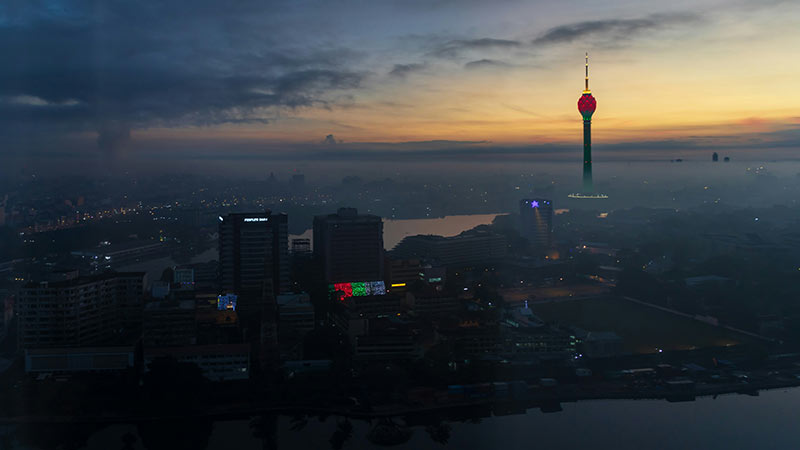
(Photo by Christoph Theisinger on Unsplash)
S&P Global Ratings has upgraded Sri Lanka’s long-term foreign and local currency sovereign credit ratings from ‘CCC+’ to ‘B-’, with a stable outlook on both ratings.
In a statement issued on November 27, 2026, the rating agency cited strong government revenue growth and rising foreign reserves as key reasons for the upgrade.
S&P also raised Sri Lanka’s short-term foreign and local currency ratings from ‘C’ to ‘B’, while maintaining its transfer and convertibility assessment at ‘B-’.
The agency said Sri Lanka was better positioned to meet higher foreign debt repayments in the coming years. It considered a government debt default unlikely over the next two years and expected the economy to remain resilient over the next six to 12 months despite disruptions to global energy supplies.
Government revenue rises by 20%
Sri Lanka’s government revenue increased by 20% during the first nine months of 2026 compared with the same period in 2025, helping the country record a budget surplus during that period.
Revenue from income tax, taxes on goods and services, international trade taxes and non-tax sources increased. S&P said efforts to improve tax collection, including the greater use of digital systems, likely contributed to this growth.
The agency expects government revenue to exceed 17% of gross domestic product (GDP) in 2026, nearly double the level recorded in 2022.
Although higher government spending towards the end of the year is expected to result in a budget deficit of 1.8% of GDP, S&P expects Sri Lanka to record a primary budget surplus, which excludes interest payments, for the fourth consecutive year.
The budget deficit is expected to widen in 2027 due to higher personal income tax thresholds, the removal of value-added tax (VAT) on school supplies and increased spending on ports, energy and transport.
About half of the original funds allocated for relief and reconstruction following Cyclone Ditwah remained unspent in 2026 and will be carried forward to 2027.
S&P expects interest payments to account for around 41% of government revenue in 2026, falling to 34% in 2029, compared with nearly two-thirds in 2024.
Government debt is also forecast to decline from around 92% of GDP in 2026 to 83% in 2029. However, the country’s economic recovery and the strengthening of the Sri Lankan rupee since 2023 are expected to trigger higher payments on bonds linked to economic performance.
Foreign reserves increase despite rising energy costs
Sri Lanka’s gross official reserves increased from US$6.5 billion in June 2026 to US$7.09 billion in October 2026.
S&P estimates that Sri Lanka will receive around US$1.7 billion from the International Monetary Fund (IMF) and other multilateral institutions in 2026, helping offset rising import costs.
However, the ongoing war in the Middle East continues to pose risks to Sri Lanka’s fuel supplies, tourism earnings and workers’ remittances.
The region accounts for around 40% of Sri Lanka’s remittances, while approximately one-third of tourists visiting the country travel through aviation hubs in the Middle East.
Year-on-year growth in remittances slowed from more than 30% in May 2026 to 5.6% in September 2026. During the first nine months of the year, tourist arrivals declined by 1.8%, while tourism earnings fell by 9.2% compared with the same period in 2025.
The Sri Lankan rupee depreciated by around 6.8% against the US dollar during the first 10 months of 2026, while annual inflation in Colombo increased from 1.6% in February to 8.3% in October as higher fuel costs affected consumers.
As of November 27, 2026, the Central Bank of Sri Lanka had increased its policy interest rate by a total of 1.25 percentage points during the year.
S&P expects Sri Lanka to record a current account deficit of 1.4% of GDP in 2026, following a surplus in 2025.
Economic growth expected to reach 4.5% in 2027
S&P forecasts Sri Lanka’s economy to grow by 4% in 2026 and 4.5% in 2027.
The agency said early government measures, including fuel rationing and a shorter working week, helped minimise disruptions to agricultural and manufacturing activities.
Although year-on-year economic growth slowed from 5.1% in the first quarter of 2026 to 4.2% in the second quarter, manufacturing output continued to grow through September.
S&P also warned that a stronger El Niño weather pattern in 2027 could disrupt monsoon rains, affect tea, rubber and rice production, and increase food prices.
Dry weather could also affect hydropower generation, which accounts for between 25% and 35% of Sri Lanka’s electricity supply.
The agency said the strong electoral mandate secured by the National People’s Power (NPP) in 2024 had improved political stability and made government policies more predictable.
It expects Sri Lanka to continue its economic reforms after the IMF’s Extended Fund Facility (EFF) programme ends in March 2027.
Conditions for further credit rating upgrades
S&P warned that it could downgrade Sri Lanka’s credit ratings if weakening government finances or a deterioration in the country’s external financial position put renewed pressure on the government’s ability to meet its funding needs.
However, the agency said a further upgrade could be possible if at least two of the following four conditions were likely to be met:
- A substantial reduction in interest payments as a share of government revenue.
- External debt, after deducting public and financial sector reserves, remaining below annual current account receipts.
- The annual change in net government debt remaining close to 3% of GDP.
- Lasting economic stability and a return to normal financing conditions that substantially reduce the government’s willingness to default on its debt.