

Sri Lanka highlights poverty reduction and social protection plans at UNESCAP meeting
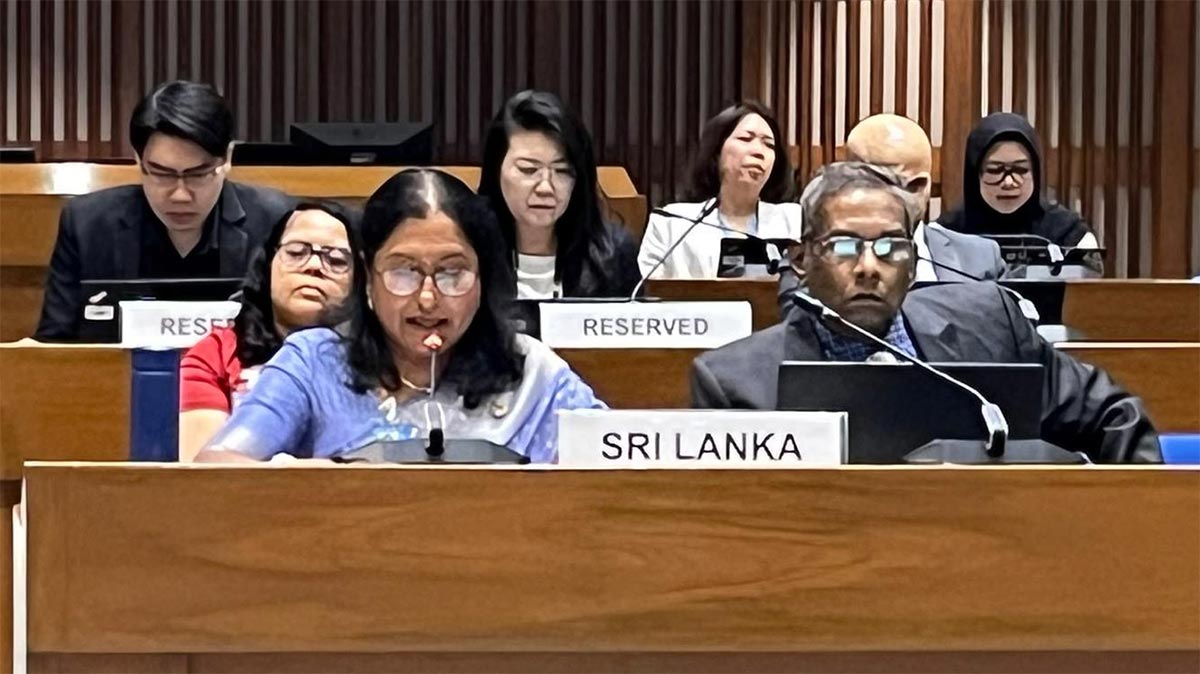
Sri Lanka has highlighted a programme targeting two million low-income families while reaffirming its commitment to poverty reduction and stronger social protection at a United Nations meeting in Bangkok, Thailand.
The commitments were outlined at the 9th Session of the Committee on Social Development of the United Nations Economic and Social Commission for Asia and the Pacific (UNESCAP), held from November 11 to 13, 2026.
Addressing the session, Sri Lanka’s Ambassador and Permanent Representative to Thailand, Wijayanthi Edirisinghe, highlighted the country’s efforts to address poverty through sustainable livelihoods, economic empowerment, improved social protection and community-led development.
She outlined several national initiatives, including the Community Empowerment Programme, which targets two million low-income families, and the Prajashakthi National Movement, which promotes community participation, integrated village development and local ownership of development activities.
The Ambassador stressed the importance of moving beyond traditional welfare assistance to help vulnerable households become economically independent and build stronger, more resilient communities.
Meanwhile, Additional Secretary of the Ministry of Rural Development, Social Security and Community Empowerment, Gamini Wijesinghe, represented Sri Lanka during discussions under Agenda Items 3, 4 and 5.
He outlined the country’s priorities for strengthening inclusive social protection systems, promoting active and healthy ageing, and increasing investment in the care economy.
Wijesinghe highlighted Sri Lanka’s National Social Protection Strategy 2025–2035, which focuses on four main areas: social assistance, social care, social insurance, and labour market and productive inclusion.
He also discussed the challenges and opportunities arising from Sri Lanka’s changing population structure, particularly its ageing population.
He emphasised the need for accessible healthcare, family- and community-based care services, improved quality standards for residential care facilities and environments that better support older people.
During the session, Sri Lanka shared its national experiences and highlighted the importance of coordinated policies, community participation, sustainable investment and regional cooperation in addressing social development challenges across Asia and the Pacific.
The country also stressed that stronger social protection and investment in care services are essential to protecting human dignity and well-being, promoting gender equality, supporting economic empowerment and achieving sustainable development.
Sri Lanka reaffirmed its commitment to building a fair, inclusive and resilient society where no one is left behind.
The Sri Lankan delegation also included Minister Counsellor and Head of Chancery Thilini Ihalage and Embassy staff member Bantarawan Kongpongsa.
The Embassy and Permanent Mission of Sri Lanka in Bangkok issued a media release on November 17, 2026, providing details of the country’s participation in the session.