

Sri Lanka steps up protection of 17 high-risk tuskers under Hasthi Sena operation
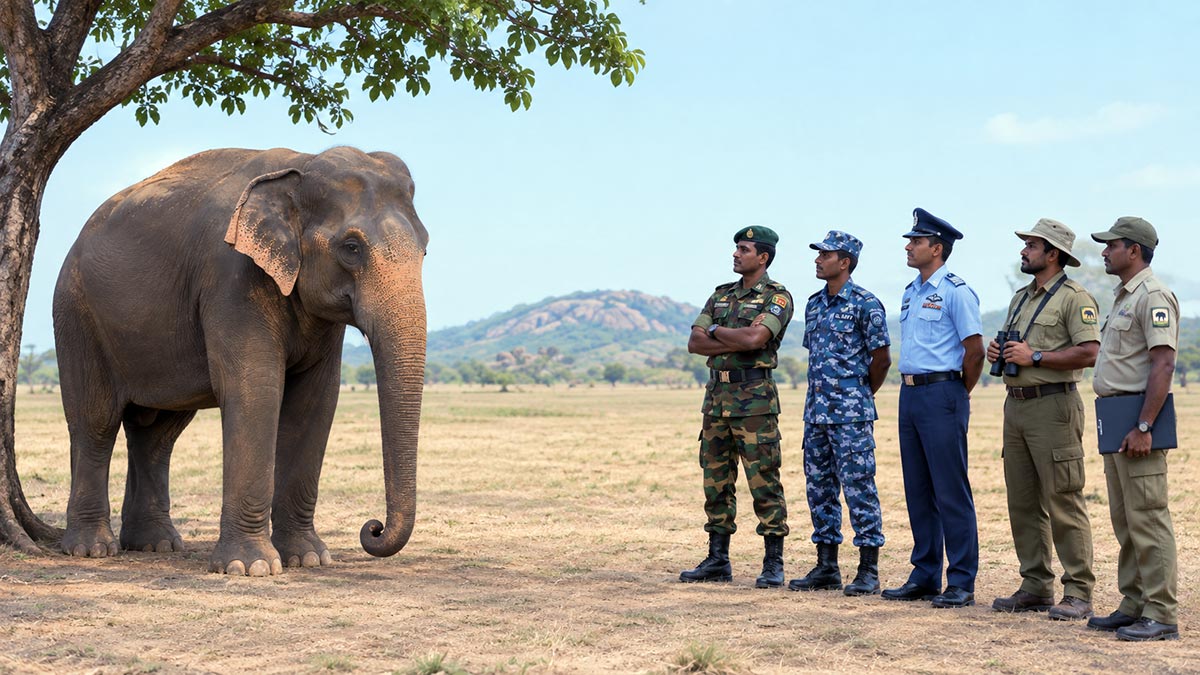
AI-generated image
Sri Lanka’s ‘Hasthi Sena’ initiative aims to provide round-the-clock protection for 17 high-risk tuskers, with military-backed operations planned to cover around 80 percent of identified forest areas inhabited by elephants.
The initiative, which was launched on November 2, 2026, brings together the Tri-Forces, the Ministry of Environment and the Department of Wildlife Conservation to protect wild elephants, particularly vulnerable tuskers.
According to the Ministry of Defence, the operation aims to protect elephants from illegal hunting, gunshot injuries, explosive traps, unauthorised electric fences, snares and other threats.
The initiative was introduced amid growing concerns over human-elephant conflict, which continues to claim the lives of both people and elephants. The destruction of natural habitats has also increased the threats facing the country’s wild elephant population.
The death of the well-known tusker Kavantisissa further highlighted the urgent need for stronger and coordinated elephant protection measures.
The Ministry of Defence is playing a leading role in coordinating military support for the initiative under the direction and guidance of Defence Secretary Air Vice Marshal Sampath Thuyacontha (Retd).
A dedicated Operations Room has been established at Army Headquarters to coordinate, monitor and support the activities of the Army, Navy and Air Force in cooperation with relevant government institutions.
The immediate priority is to monitor the movements of 17 tuskers identified as being at high risk and provide continuous protection through surveillance and timely intervention.
Seven suspects arrested during early operations
The Ministry of Defence said military involvement in elephant protection began even before the nationwide Hasthi Sena operation was officially launched.
Army personnel, wildlife officers and an Air Force Veterinary Surgeon conducted joint operations in the Meekiriyawa and Neeginiyawa areas.
These operations resulted in the arrest of seven suspects and the recovery of unauthorised firearms and other evidence linked to illegal hunting activities.
The nationwide Hasthi Sena operation was officially launched in Galgamuwa with the participation of the Ministry of Environment, the Tri-Forces and the Department of Wildlife Conservation.
During the initial phase, the Sri Lanka Army deployed 60 personnel divided into 10 operational teams under six groups.
The operation is being carried out under the direct supervision of Army Commander Lieutenant General Nilantha Premaratne.
According to the Ministry, the operation follows a systematic and scientifically planned approach and is expected to cover approximately 80 percent of identified forest areas inhabited by elephants.
The deployment aims to strengthen field surveillance, improve responses to emerging threats and provide additional protection for vulnerable elephants.
Illegal weapons and traps recovered in Anuradhapura
As part of the intensified Hasthi Sena programme, a special operation was recently conducted in the Thirappane area of the Anuradhapura District, which is frequently visited by the well-known tusker Agbo.
The operation was carried out under the leadership of the Ministry of Environment and the 7th Battalion of the Sri Lanka Armoured Corps, with approximately 75 Army personnel and officers of the Department of Wildlife Conservation taking part.
The operation covered Galkulama, Muriyakadawala, Kirindegama and Wannankulama.
During the operation, officers recovered illegal firearms, trap guns, Hakka Patas, gunpowder and traps used for illegally hunting wild animals.
Hakka Patas are explosive devices concealed in bait that can cause serious injuries or death to elephants and other wildlife.
The Ministry said these recoveries highlighted the continuing threats faced by wild animals and the need for sustained enforcement operations in high-risk areas.
Plans to strengthen protection along elephant corridors
The military’s role under Hasthi Sena includes coordinated surveillance, intelligence sharing, field operations and assistance to wildlife enforcement authorities.
Special attention is being given to preventing the use of illegal firearms, trap guns, Hakka Patas, unauthorised electric fences and snares.
The programme also aims to strengthen action against individuals and networks involved in wildlife-related offences while improving the ability of wildlife authorities to respond to threats.
During subsequent discussions, senior representatives of the Tri-Forces and relevant government officials considered further measures to expand the initiative and make it a permanent part of elephant protection efforts.
These included proposals to deploy specialised military protection teams along high-risk elephant corridors, particularly routes used by solitary tuskers and herds with calves.
Continuous monitoring of elephant movements and intelligence-led operations against the manufacture, distribution and use of illegal firearms, trap guns and Hakka Patas were also discussed.
The Ministry of Defence emphasised that long-term solutions to human-elephant conflict require more than surveillance and law enforcement.
It said greater community participation, public awareness and cooperation among government institutions are essential to address the underlying causes of the conflict.
The Ministry added that the involvement of the Tri-Forces would strengthen national conservation efforts by using military resources, operational capabilities and professional expertise to protect Sri Lanka’s wild elephants, preserve biodiversity and safeguard the country’s natural heritage for future generations.