

Sri Lanka president cancels colonial-era order amid falling popularity
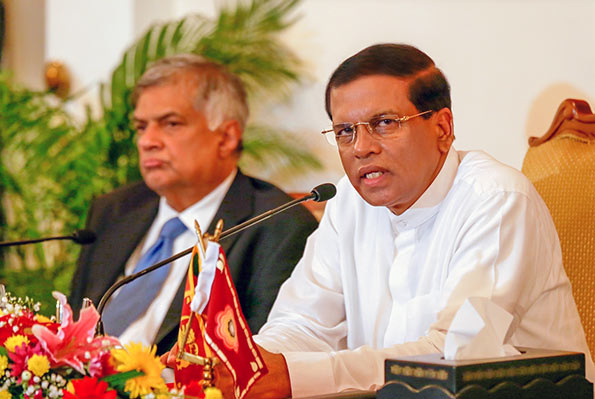
Sri Lanka President Maithripala Sirisena on Thursday rescinded a colonial-era British order naming 19 nationals as “traitors” for leading a rebellion nearly 200 years ago, his office said, as he strives to shore up his fading popularity.
Sirisena hailed the ethnic Sinhalese men whole led the insurrection against the island’s British rulers as national heroes, a move some critics were swift to denounce as a political gimmick to bolster his support among the Sinhalese majority.
Sirisena said he had “canceled the gazette notice issued by then governor of Sri Lanka Robert Brownrigg in 1818 naming the … Sinhalese leaders as traitors.”
Sirisena’s leadership of the ruling Sri Lanka Freedom Party (SLFP) has been weakened as grassroot supporters shift their loyalties back towards the Indian Ocean island state’s former president Mahinda Rajapaksa.
Rajapaksa remains popular among the Sinhalese and some of his supporters have formed a new party in the expectation that he will lead it.
Kusal Perera, a political columnist and outspoken government critic, said Thursday’s act was a clear indication Sirisena was now going to cater to the larger Sinhala majority”.
Even so, Perera said, Sirisena was unlikely to win back much support as a result of the announcement.
“Sinhala leaders anyway have been treated as heroes in Sinhala society. This shows how desperate Sirisena is,” Perera told Reuters.
Sirisena was a one-time ally of Rajapaksa before he challenged his leadership and won a surprise victory in last year’s presidential vote.
The president, who like Rajapaksa is from the majority Buddhist community, has reached out to ethnic minority Tamils and Muslims, upsetting Sinhala leaders.
Sirisena’s government has postponed local council elections by more than a year citing the new electoral process is still not ready.
Sri Lanka was under colonial rule from 1815 to 1948.
The 19 Sinhalese leaders launched their revolt in a bid to restore the ruling of Sinhalese kings who exercised power before Portugal’s invasion in 1505.
The British governor ordered their execution.
(Reuters – by Ranga Sirilal / Shihar Aneez)
the least sirisena could have done is to have named these traitors and what their treachery was. Sirisena further ought to have declared a national holiday to commemorate whatever they stood for