

Sri Lanka to close 34 state institutions, President says
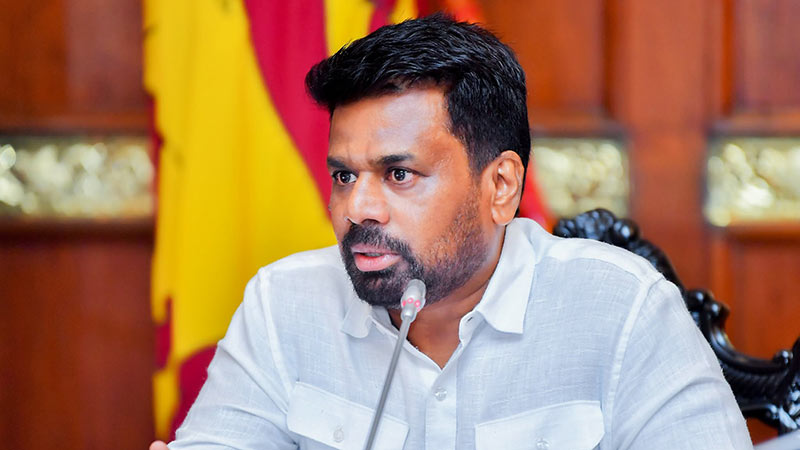
FILE PHOTO
Sri Lanka’s Ministry of Finance has decided to close 34 state institutions, President Anura Kumara Dissanayake said, adding that a committee has been appointed to handle the process.
He made these remarks today (October 23) at the annual general meeting of the Government Surveyors’ Association in Battaramulla.
The President said some state institutions would be closed and others merged because the cost of providing public services is too high. He also pointed out that the country’s needs have changed since some of these institutions were established.
“Some institutions were established to meet needs that existed at the time, but those needs are different today,” he said, noting that the private sector now provides services in areas where the public sector once had a greater role.
He questioned whether the government needed to continue providing all these services itself or whether some activities could be handed over to the private sector at a lower cost.
Dissanayake acknowledged that closing state institutions is complicated and said allowances would have to be paid when an institution is closed.
The President also highlighted challenges facing the public service, particularly the shortage of professionals and the difficulty of attracting and retaining skilled workers.
He said many vacancies remain in professional positions, while lower-level positions have been filled extensively through political appointments in recent years.
He warned that the public service could face a major crisis if it failed to attract professionals and become a more appealing workplace.
The President also discussed the country’s economic position, saying Sri Lanka has sufficient rupee resources to face an economic shock arising within the country. However, he said the economy is not strong enough to withstand an external shock.
He stressed that the public service has an important role in ensuring that the wealth received by the Treasury reaches people at the grassroots level. A strong public-sector mechanism is essential for this purpose, he said, adding that the current government firmly believes in the need for such a system.
Salary increases and allowances
Dissanayake said the government has decided to increase the basic salaries of public servants despite the financial challenges facing the country.
However, he said Rs. 110 billion would be needed for salary increases in 2027. As a result, the government would place greater emphasis on allowances in the current budget.
He said allowances would receive considerable attention in 2028, when basic salaries would not be increased. The government would nevertheless consider essential allowances needed to retain employees in the public service.
The President said improving the public service’s ability to attract and retain professionals is important to prevent it from facing a deeper crisis.
He reiterated that the government has decided to close some state institutions and merge others as part of its efforts to address the high cost of providing public services.