

Chathuranga outlines Government measures to boost Sri Lanka’s export sector
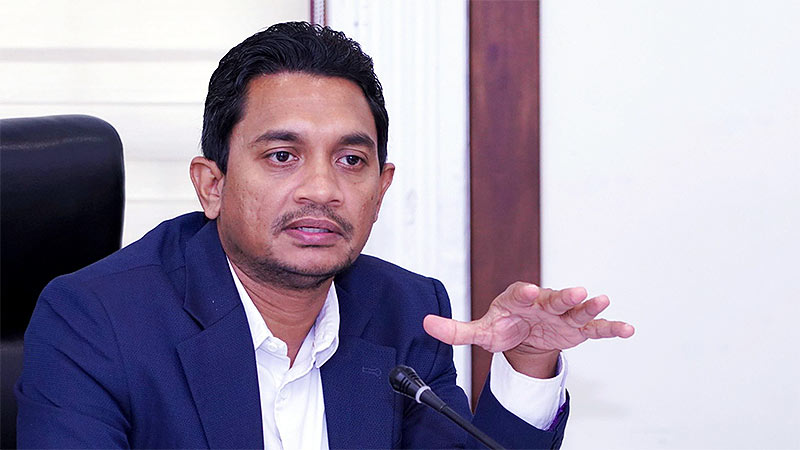
Deputy Minister Chathuranga Abeysinghe
Sri Lanka has doubled its 2025 export promotion budget, reduced a proposed 44% US tariff on Sri Lankan exports to 20%, and secured continued trade benefits with the UK and EU, according to Deputy Minister of Industry and Entrepreneurship Development, Chathuranga Abeysinghe.
In a Facebook post published today (May 27), the Deputy Minister outlined a series of measures taken by the new government within a short period to support and strengthen Sri Lanka’s export sector.
Among the key actions highlighted was the establishment of the Export Development Board (EDB) under the Ministry of Industry and the filling of nearly 70 long-vacant positions at the EDB that had remained unfilled for almost a decade.
He said the government also doubled the 2025 export promotion budget from the previously allocated Rs. 700 million and reactivated the Export Development Ministerial Committee (EDCM) after 25 years, helping resolve around 25 long-standing industry issues.
According to the statement, rapid government intervention helped reduce a proposed 44% US tariff on Sri Lankan exports to 20%, protecting a market that accounts for nearly 25% of Sri Lanka’s exports.
The Deputy Minister further stated that the government ensured continuity in the export sector during the energy and oil crises by prioritizing export industries.
Several industry-related reforms were also announced, including the authorization of coconut kernel and coconut milk imports to address raw material shortages affecting coconut exports, the finalization of a long-delayed fish re-export mechanism, and the removal of restrictions affecting spice imports for re-export purposes.
He also noted that Sri Lanka successfully negotiated continued duty-free export access to the United Kingdom and received firm assurances from the European Union regarding the continuation of GSP+ trade benefits.
The government also removed barriers affecting Sri Lankan crab exports to the United States and intervened through the EDB to reduce trade barriers in Indian and Chinese markets.
In addition, measures were taken to address delays in export certification processes across line ministries, while Rs. 2 billion was allocated for the Export Single Window system, with implementation nearing completion in several sectors.
The Deputy Minister said the government also worked with the Inland Revenue Department to avoid disruptions to exporters following SVAT reforms.
He further stated that the National Export Development Plan was updated with Asian Development Bank (ADB) collaboration and received Cabinet approval, unlocking USD 200 million in ADB-backed support.
A joint program between the Ministry of Foreign Affairs and the Ministry of Industry has also been launched to assign export targets to Sri Lankan diplomatic missions worldwide.
According to the statement, long-term cooperation with the European Union has begun to strengthen Sri Lanka’s organic agricultural export processing value chain, while exporters were also granted tax deductibility for overseas business expenses when calculating income tax.
The Deputy Minister said monthly export advisory committee meetings are now being held to continuously address exporter concerns.
The government has also launched a nationwide export industry promotion initiative for 2025 aimed at educating new exporters on standards, packaging, and international market readiness.
Entrepreneurship development linked to export-oriented value chains has been identified as a key Ministry objective for 2025, while awareness and use of the Temporary Import for Export Processing (TIEP) scheme are also being expanded to integrate domestic industries into export markets.
He added that transparent access has been opened for SMEs and service exporters to internationally recognized export promotion opportunities.
Cabinet approval and Rs. 300 million in funding have also been secured to relaunch Sri Lanka EXPO after 14 years. Although originally planned for June, the event has been rescheduled to next January due to global economic conditions.
The Deputy Minister said future priorities include attracting export-led investments, expanding infrastructure and financial support, establishing export certification laboratories, strengthening export supply chains, negotiating new international trade agreements, and introducing targeted export-driven incentives.
“Sri Lanka’s export economy cannot be transformed overnight. But step by step, structural reforms are now being implemented with a clear long-term direction,” he stated.