

India plans new rules as digital payment fraud surges
AI-generated image
India’s Central Bank is considering new rules to fight a sharp rise in digital payment fraud, after millions of people reportedly lost billions of dollars in 2025.
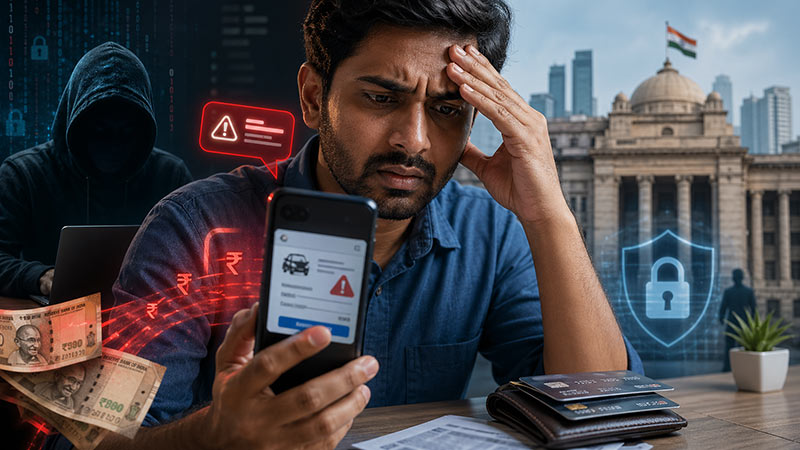
According to the BBC, one victim in Pune lost more than USD 3,200 after clicking a fake traffic fine payment link sent by scammers. The message claimed that his driving licence could be suspended if he did not pay a small speeding fine quickly.
The victim was asked to enter a one-time password to complete the payment. However, instead of paying the small fine amount, he unknowingly approved a much larger credit card transaction.
Experts say this type of scam is known as social engineering. In such cases, fraudsters use fear, pressure and urgency to trick people into sharing sensitive details or approving payments.
India has seen a major increase in such fraud as digital payments have grown rapidly in recent years. Nearly 2.5 million people reportedly lost around USD 25 billion in 2025, a sharp rise compared to 2021.
The Reserve Bank of India (RBI) has now proposed several measures to reduce digital payment fraud. These include a possible one-hour delay for some account-to-account transactions, extra approval from a trusted person for high-value payments made by vulnerable people, including elderly users, and stronger checks to detect mule accounts used to move illegal money.
The RBI is also looking at giving customers more control over digital payments, including the ability to switch payment options on or off and set transaction limits.
However, experts told the BBC that the proposals may have only limited impact unless they are supported by stronger technology, better enforcement and wider public awareness.
Some experts warned that delaying payments could be difficult to implement because India’s digital payment system is built for instant transactions. They also said scammers may find new ways to bypass such delays.
Experts also said better detection of mule accounts, faster use of fraud-tracking technology and stronger cooperation between banks, police, regulators and government agencies will be important.
They added that digital literacy is a major part of the solution, as many people are using online payments faster than they are learning how to identify scams.
The RBI’s proposals are still under consultation and are expected to be finalised after public comments and feedback.