

Nepal flash flood death toll rises to at least 987, thousands missing
(Image credit: Courtesy of the respective owners)
UPDATE – September 1, 2026, 2:30 PM: The death toll from the flash floods in Nepal has risen to 987, while 3,916 people remain missing, including 583 foreign nationals.
At least 11,814 people have been rescued. Search operations are continuing, with efforts focused on hundreds of workers missing from 12 hydropower project sites, many of whom are feared trapped inside tunnels.
UPDATE – August 26, 2026, 9:54 PM: At least 95 people have died and hundreds remain missing after a massive flash flood swept through northern Nepal and downstream areas today (August 26).
Nepal Police said 95 bodies had been recovered from Rasuwa, Nuwakot, Dhading, Gorkha, Chitwan, Tanahun and East Nawalparasi districts.
The victims include men, women and children, while some of the bodies have not yet been identified.
According to the latest figures from the Nepal Tourism Board, 403 tourists remain missing, including 341 foreign nationals and 62 Nepalis. The missing foreign tourists are from more than 25 countries.
Another 85 security personnel are also missing, including 44 Nepal Army members, 28 Nepal Police officers and 13 Armed Police Force personnel.
Meanwhile, 60 people connected to the 20-megawatt Langtang Khola Hydropower Project remain out of contact.
Nepal Police said at least 63 injured people were receiving treatment at hospitals in the affected areas and in Kathmandu.
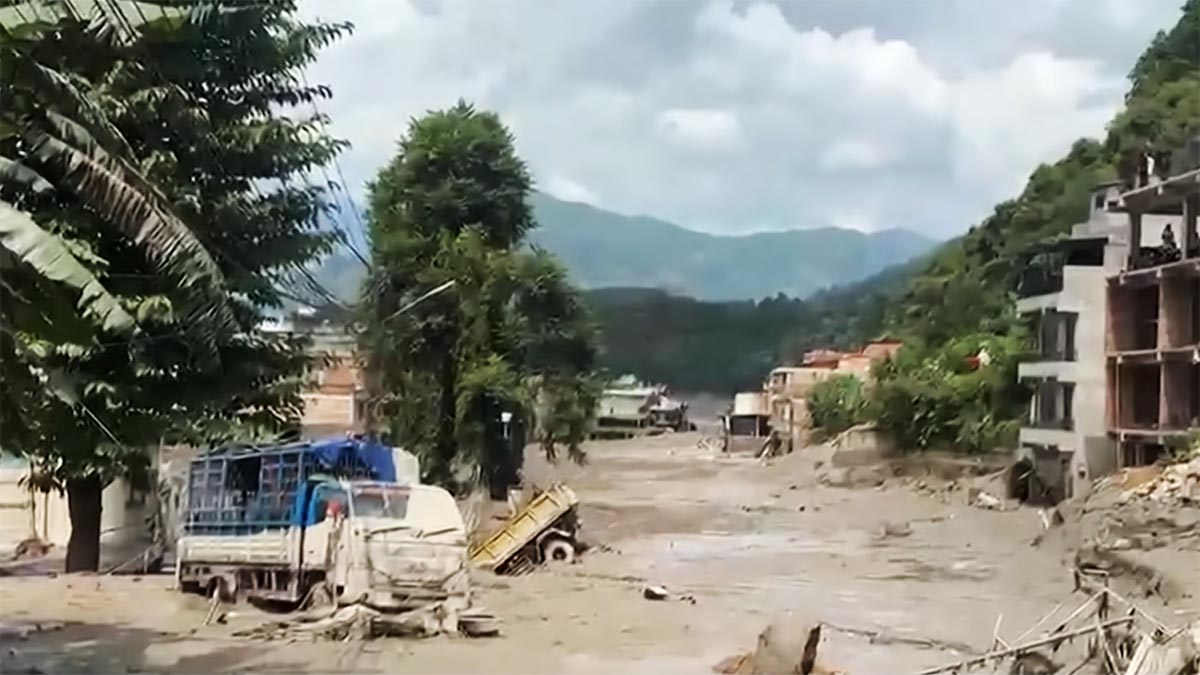
The flood struck at around 8:40 AM and caused severe destruction in Rasuwa district near Nepal’s border with Tibet. Timure, Rasuwagadhi and Syabrubesi were among the worst-affected areas.
Floodwaters rushed through the Bhote Koshi River before continuing downstream into the Trishuli River, damaging or sweeping away settlements, markets, police offices, roads, bridges, bank buildings and hydropower facilities.
Government figures show that 19 road bridges and about 40 kilometres of roads were damaged. Electricity and communication services were also disrupted, making it difficult for authorities to reach some affected areas.
The Nepal Army, Nepal Police and Armed Police Force have been deployed for search and rescue operations. Military and private helicopters are also being used to rescue stranded people.
However, damaged roads, bad weather and high river levels have affected rescue efforts.
The exact cause of the disaster has not yet been confirmed.
Preliminary analysis of satellite images indicated that a large mass of snow and rock may have fallen into the Lhende River near the Nepal-China border, sending water, mud and debris downstream.
A magnitude 4.4 earthquake was recorded in the border region shortly before the flood. Nepalese authorities are investigating whether the earthquake triggered an avalanche or landslide.
Experts are also examining whether a glacial lake burst or a temporary blockage in the river contributed to the disaster.
A local official said no rain had been reported around the Rasuwa district headquarters before the flood.
Authorities have warned that another flood could occur because debris may still be blocking part of the river upstream. People living near the Bhote Koshi and Trishuli rivers have been advised to move to safer areas.
The Nepalese government has declared the affected local areas disaster crisis zones for three months.
The government has also ordered free medical treatment for the injured and the urgent distribution of food, shelter and other relief supplies to affected communities.