

Sri Lanka marks 100 years of public health service
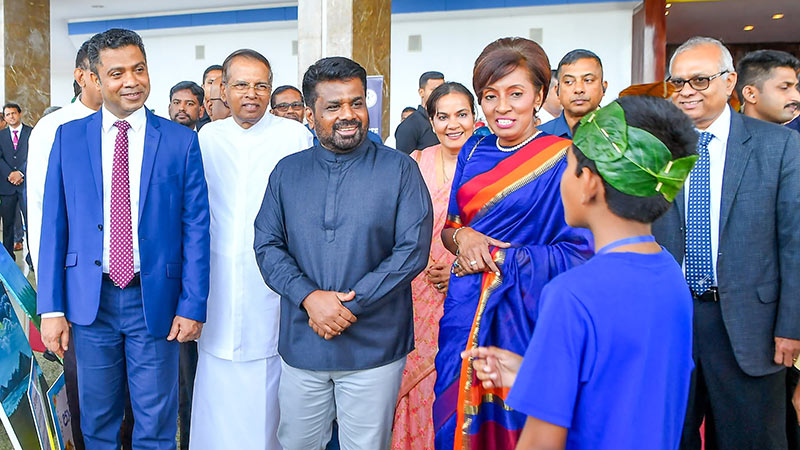
Sri Lanka marked the centenary of its Public Health Service on Tuesday (July 21), highlighting major achievements in maternal and child healthcare and the elimination of malaria.
The centenary celebration was held at the Bandaranaike Memorial International Conference Hall (BMICH) in Colombo under the patronage of President Anura Kumara Dissanayake.
Sri Lanka’s Public Health Service began with the establishment of the Kalutara National Health Unit in 1926. It was the first field health unit in the South Asian region.
The service has since developed into an extensive network of more than 362 Medical Officer of Health (MOH) divisions, with public health teams forming its backbone.
Medical Officers of Health, Public Health Midwives and Public Health Inspectors play a major role in these teams. Their direct links with communities and the public trust they have gained have helped bring significant changes to the country’s healthcare system.
During the commemorative event, organised by the College of Community Physicians of Sri Lanka, 36 community health professional groups were recognised for their outstanding contribution to the development of primary healthcare over the past century.
Several publications were also launched under the patronage of the President. They included a centenary commemorative publication and a White Paper outlining the future direction of Sri Lanka’s community health service.
Addressing the gathering, Minister of Health and Mass Media Dr Nalinda Jayatissa described the Public Health Service as a sector with a proud history, a trusted present and a promising future.
He said maternal healthcare interventions had helped reduce maternal deaths from 2,500 to as low as 25. Infant mortality, which had previously stood at around 200 per 1,000 live births, had been reduced to between five and six.
The Minister also noted that Sri Lanka had eliminated malaria, which had once claimed 100,000 lives in the country.
He said these achievements showed the progress Sri Lanka had made in community healthcare. The country had developed its own model demonstrating how a lower- and middle-income nation could improve community healthcare while maintaining high standards of quality.
Dr Jayatissa said these achievements were made possible by the dedication of healthcare personnel and expressed his appreciation for their contribution. He also acknowledged the commitment shown by community health personnel during recent epidemics and disasters.
World Health Organization Representative Dr Rajesh Sambhajirao Pandav, who is serving as the United Nations Resident Coordinator in Sri Lanka, said maintaining past achievements alone would not be enough as the country prepares for the next century.
He said Sri Lanka’s healthcare needs were changing rapidly, with new challenges arising from non-communicable diseases, an ageing population, mental health needs, climate-related risks and epidemics.
Dr Pandav said non-communicable diseases were increasing due to unhealthy diets, physical inactivity and alcohol consumption. He added that these risks were also influenced by social, economic and environmental conditions.
He said the United Nations and development partners remained committed to supporting Sri Lanka in achieving sustainable development and improving the well-being of its people. He also commended the century-long journey of the Public Health Service and extended his best wishes for its future.
Secretary to the Ministry of Health and Mass Media, Consultant Dr Anil Jasinghe, said the Arogya Programme introduced by the present Government provided a clear vision for the future development of the community health sector.
He said that although concerns had previously been raised about insufficient investment in community healthcare, the sector had been given the highest priority under the Arogya Programme.
Dr Jasinghe said this approach reflected a transformation of the healthcare system, greater equity and the efficient use of technology.
Director General of Health Services Dr Asela Gunawardena, President of the College of Community Physicians of Sri Lanka Consultant Dr Vindya Kumarapeli and President of the Sarvodaya Movement Consultant Community Physician Dr Vinya Ariyaratne also addressed the gathering.
Former President Maithripala Sirisena; Minister of Youth Affairs and Sports Sunil Kumara Gamage; Minister of Science and Technology Chrishantha Abeysena; Deputy Minister of Education and Higher Education Dr Madhura Senevirathna; other ministers and Members of Parliament; ministry secretaries and government officials; Deputy Directors General of Health Services; Provincial and Regional Directors of Health Services; College Secretary Santhushya Fernando; community medicine specialists and officials; and representatives of the World Health Organization, the United Nations, UNICEF and other international organisations attended the event.