

Sri Lanka President tells Police officers linked to drug traffickers: Change conduct or leave the service
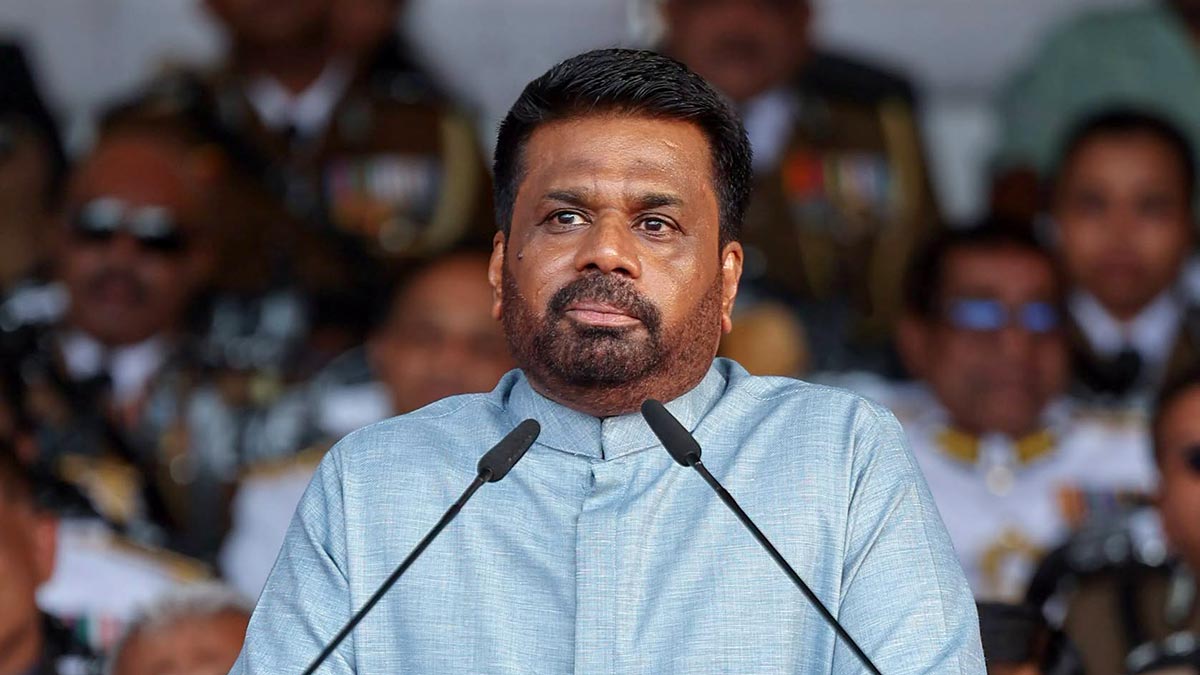
Sri Lanka President Anura Kumara Dissanayake
Sri Lanka President Anura Kumara Dissanayake says the Government will introduce a proper promotion system for Police officers, provide a risk allowance and introduce a new Police uniform by around the middle of next year.
The President made the announcement while addressing the 160th Police Day celebration held yesterday afternoon (September 3) at the Police Field Force Headquarters in Thimbirigasyaya.
He said the Government has already approved the recruitment of 10,000 new personnel to address the shortage of Police officers, while steps will also be taken to improve infrastructure and strengthen human resources within the Sri Lanka Police.
President Dissanayake said promotions should not be based only on seniority, but should also consider merit and examinations. He added that discussions would be held with the Public Service Commission to address accumulated promotions and place eligible officers who have not received promotions in appropriate positions on a supernumerary basis.
The President also said nearly 700 motorcycles and 200 single-cab vehicles would be purchased for official Police duties, while Sri Lanka has already received 138 cab vehicles under Indian assistance.
Funds are expected to be allocated in the upcoming Budget for a modernised Police Headquarters and a new building for the Criminal Investigation Department. Funding is also expected for the modernisation of the Police Hospital, accommodation facilities, official housing and the relocation of police stations currently operating from rented buildings to government-owned premises.
The President said modern technology, training and knowledge would also be strengthened within the Police service. Several applications developed by the Sri Lanka Police together with a private company were launched during the event.
He stressed that the most important responsibility of the Police at present is to suppress dangerous drugs and organised criminal gangs, calling on officers to treat the task not only as an official duty but also as a wider social responsibility.
The President warned that a small number of Police officers were allegedly maintaining links with drug traffickers, while some had been influenced by fear or had been bought over. He called on such officers to change their conduct or leave the Police service.
According to the President, Police have carried out the highest number of drug raids and arrests in the country during the past two years, seizing 5,255 kilograms of heroin, 9,966 kilograms of crystal methamphetamine or “Ice”, 44,684 kilograms of Kerala cannabis and 16.2 million narcotic tablets and capsules.
He also said 74 armed criminals who had been hiding overseas had been brought back to Sri Lanka with the assistance of Police intelligence units and foreign governments, while several more are expected to be brought back in the near future.
President Dissanayake said investigations and court proceedings related to serious crimes must be made faster, noting that delays in punishment could encourage further crime. He said the Government would introduce necessary laws and infrastructure and would not hesitate to pursue constitutional amendments if required to strengthen the process.
During the anniversary event, the “Sri Lanka Police Mobile App” was introduced to improve the exchange of information between the Police and the public and make services faster and more efficient. The upgraded official Sri Lanka Police website was also launched.
A commemorative stamp and first-day cover marking the 160th anniversary were presented to the President. He also symbolically presented promotion letters for promotions granted with effect from January 1, 2026, under the long-service basis.
Under the promotions, 1,489 Police officers below the rank of Chief Inspector and 153 officers of the Police Special Task Force received promotions.
President Dissanayake also praised the Sri Lanka Police for its service to the public and its role in maintaining peace and security during conflicts, disasters, epidemics and other crises over the past 160 years.