

Sri Lanka to convert Parliament Speaker’s residence into study and research centre
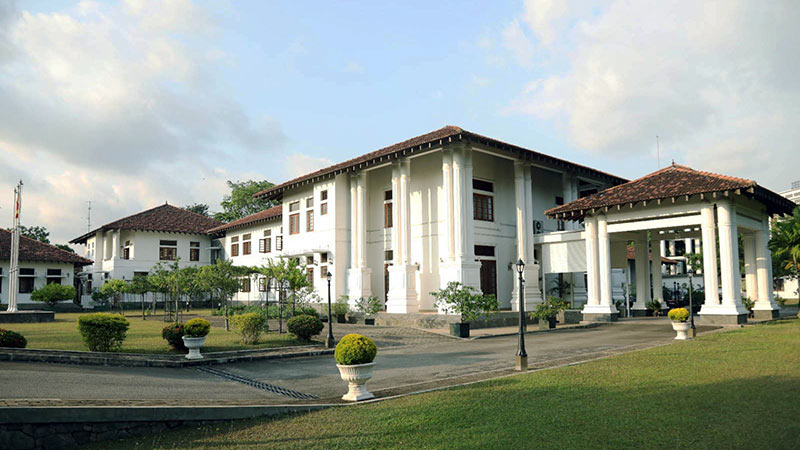
The Parliament of Sri Lanka has reached a policy agreement to transform the official residence of the Speaker into a dedicated Centre for Parliamentary Studies and Research.
The initiative, approved by the Parliamentary Staff Advisory Committee, is intended to serve Members of Parliament, Provincial Councils, and Local Government representatives.
The decision was made during the committee meeting held on July 24, 2025, chaired by Speaker Dr. Jagath Wickramaratne.
As part of the initial steps, the committee approved the appointment of a Project Manager preferably a retired senior government officer to lead the planning and setup of the Centre over a six-month period.
The proposed Centre will focus on strengthening governance and legislative capacities across all levels of government by offering access to advanced research resources, specialized training, and policy analysis. The Speaker’s Private Secretary pointed out that the location, spaciousness, and historical value of the residence made it ideal for this transformation.
The Centre will function under the Parliament Secretariat. Funding will be primarily sourced from Parliament’s budget, with potential support from international partners like the UNDP and the Commonwealth Parliamentary Association.
Long-term operations are expected to be sustained through government grants, donor support, and nominal training fees.
Leader of the House and Minister of Transport, Highways, Ports and Civil Aviation, Bimal Rathnayake, praised the initiative. He stressed the importance of developing a strong academic framework for training programs, including curriculum design, course structure, credit hours, and evaluation methods to ensure their effectiveness.
Minister of Labour and Deputy Minister of Economic Development, Dr. Anil Jayantha, proposed the creation of both digital and physical repositories for legislative documents and historical records.
He also encouraged partnerships with other institutions to benefit from their expertise instead of managing the Centre in isolation.
Speaker Dr. Wikramaratne noted that the Centre would act as a hub for professional development and knowledge sharing through collaboration with international organizations, think tanks, and research institutions.
Well, the speaker is the 3rd citizen in Sri Lanka. When his official residence going to be converted to a Centre for Parliamentary Studies and Research where he is going to live? In a hotel room? Is it this building is needed for the said purpose? Is the government providing alternative accommodation for the speaker? And, in future there will be no official residence for the speaker?