

Sri Lanka launches project to establish first National Building Code
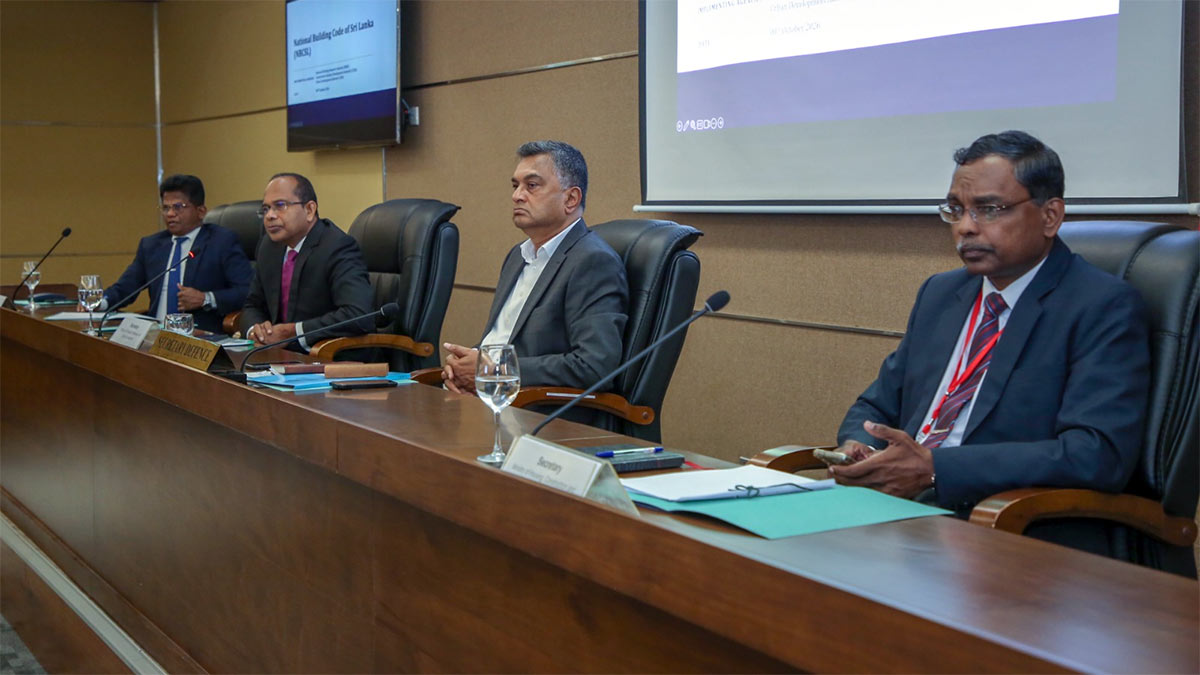
Sri Lanka has launched a national project to develop its first National Building Code, aimed at improving building safety, construction quality and protection against natural disasters.
The initiative was launched by the Ministry of Defence and the National Building Research Institute (NBRI).
Defence Secretary Air Vice Marshal Sampath Thuyacontha (Retd) chaired a meeting at the Ministry of Defence on October 8, 2026, to discuss the project.
Senior officials from the NBRI, National Planning Department (NPD), Urban Development Authority (UDA) and Construction Industry Development Authority (CIDA) attended the meeting.
According to the Ministry of Defence, the project proposal submitted by the NBRI to the National Planning Department has been approved for implementation from 2026 to 2028.
The Cabinet had also granted approval on October 21, 2025, under reference number 25/1928/803/054, following a memorandum submitted by the President in his capacity as Minister of Defence.
The project will be jointly managed by the NBRI, CIDA and UDA, in consultation with other relevant institutions and stakeholders.
Sri Lanka currently does not have a single, legally established National Building Code. Instead, building design and construction follow a combination of international standards, including the International Building Code (IBC), Eurocodes, British Standards and Indian Standards, along with local regulations and requirements for different sectors.
The Ministry noted that using these different standards separately or together can lead to inconsistencies in checking building designs, granting approvals and enforcing regulations.
The proposed National Building Code of Sri Lanka (NBCSL) is expected to address these issues by introducing a common set of national standards suited to Sri Lanka’s climatic, geological and environmental conditions.
The Ministry said such standards are particularly important because Sri Lanka faces natural hazards, including floods, landslides and strong winds.
The proposed Code will provide a clear and consistent basis for safer building design, construction, maintenance and regulatory oversight.
The new Code will follow internationally recognised practices while taking local conditions into account. It will cover ten key technical areas, including structural safety, fire safety, sustainability and accessibility for all people.
It will also introduce procedures for building permits, inspections, compliance and enforcement.
The project has two main objectives: to bring existing building regulations under a single national framework and to establish the institutional arrangements and procedures needed to apply the Code consistently across the country.
This will include clearly defining the responsibilities of relevant institutions, improving building approval and inspection procedures, strengthening enforcement and providing training for regulators and construction industry professionals.
Government institutions, professional organisations, academics, construction industry representatives and the public will be consulted during the preparation of the Code to ensure that it meets national needs and can be implemented effectively.
A qualified consulting firm will be selected through a competitive procurement process in accordance with National Procurement Agency Guidelines.
The assignment is expected to take 24 months and will conclude with the preparation and publication of the National Building Code in the Government Gazette.
Funds have been allocated for the project through the Sri Lankan Government’s Consolidated Fund for the 2026–2028 period.
The Ministry of Defence said in its press release that the initiative reflects the Government’s commitment to protecting lives and property through modern, science-based construction standards. It also described the introduction of a national building code as a long-overdue measure that would help create a safer and more disaster-resilient Sri Lanka.
The Ministry of Defence and NBRI have already called for Expressions of Interest (EOI) from qualified consultancy firms to undertake the assignment.