
Sri Lanka’s poverty is structural, not personal, says Deputy Minister
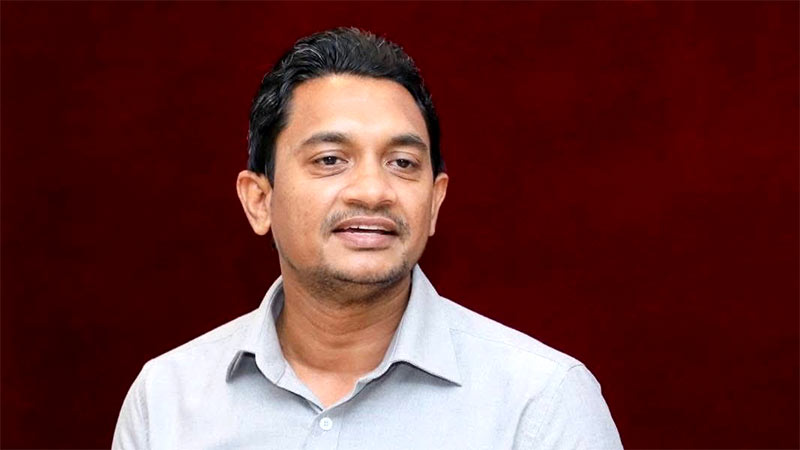
Chathuranga Abeysinghe, Deputy Minister of Industry and Entrepreneurship Development
Poverty in Sri Lanka cannot be eliminated without addressing its structural causes, Deputy Minister of Industry and Entrepreneurship Development and Chairman of the Kotte Coordination Committee, Chathuranga Abeysinghe, said.
He revealed that a data driven poverty reduction program is currently being implemented in Kotte to uplift extremely poor families through targeted economic empowerment.
In a Facebook post published today (December 29), Abeysinghe stated that poverty and the weakness of citizens linked to it have long sustained corrupt politics, pushing the country into economic, social, and cultural decline.
He emphasized that poverty should not be seen as a personal failure, noting that it is a vicious structural cycle passed down through generations that lack proper housing, education, healthcare, and positive social attitudes.
He said scientific methods using accurate data and statistics are now being applied in Kotte, with relevant information gathered through Samurdhi Officers and Development Officers. According to him, there are currently 2,076 Aswesuma beneficiary families in Kotte.
Of these, 1,165 families will automatically exit the Aswesuma program as transitional beneficiaries, while the remaining 911 families are classified as extremely poor or poor. He noted that this figure may change on an annual basis.
Abeysinghe explained that funds have been allocated by relevant ministries to empower these families through several measures, including machinery and equipment worth up to Rs. 50,000 for economic activities, loans up to Rs. 200,000 at an interest rate of 4 percent, concessional loans at 8 percent interest, and vocational training assistance of up to Rs. 50,000.
He stressed that public officers are responsible for ensuring these benefits are distributed through proper scientific administration and said political influence must be kept out of the beneficiary selection process. This year, Kotte Samurdhi and Development Officers selected 45 families and enrolled them in various empowerment programs.
The Deputy Minister said the objective is to implement a collective program to ensure these 45 families do not fall back into the group of 911 poor families. He added that strong political leadership and coordination are essential to achieve this goal.
Providing examples, Abeysinghe said beneficiaries include electricians, masons, welding technicians, and micro entrepreneurs. He noted that their success depends on continuous follow up and effective support to help them achieve their goals. He also said officers have prepared future financial plans for all selected families.
Abeysinghe stated that if the same process is followed across society, the number of extremely poor or poor families could be reduced by half. He said supporting 50 families annually through government programs and another 50 through private and voluntary organizations would allow 100 families to be uplifted each year.
He invited private institutions and voluntary organizations to collaborate in Kotte and urged them to channel CSR funds toward clearly defined objectives. He added that proper use of accurate data would reduce government transitional expenditure and help minimize social issues such as drug abuse in the area.
Highlighting past policy failures, Abeysinghe noted that Sri Lanka had 300,000 Samurdhi beneficiary families in 2004, a figure that later increased to 1,800,000 under what he described sarcastically as the guidance of economic experts.
He said reducing poverty and building dignified lives remains the foremost development goal of the National People’s Power.