

U.S. envoy urges Sri Lanka to cut trade barriers, boost business climate
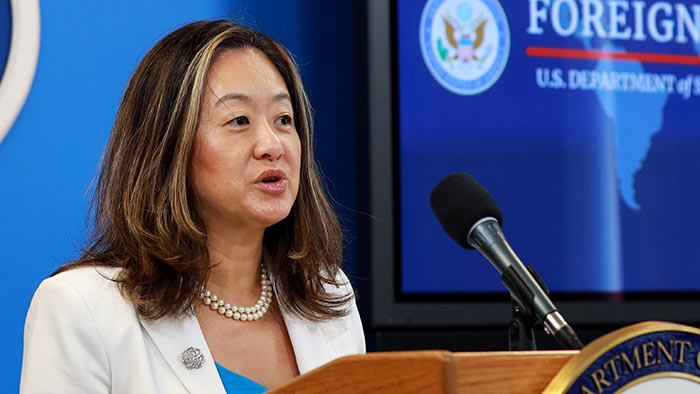
Julie J. Chung – U.S. Ambassador to Sri Lanka
US Ambassador to Sri Lanka Julie Chung has called on the country to strengthen trade facilitation and improve its business environment by reducing non-tariff barriers.
Speaking during a meeting with officials of the Ceylon Chamber of Commerce, Ambassador Chung said Sri Lanka should “seize this window of opportunity” by enhancing openness and competitiveness to attract more investment.
The meeting focused on trade, investment, and economic opportunities between Sri Lanka and the United States, the Chamber said in a statement.
Ambassador Chung met with Chamber Chairman Krishan Balendra, Vice Chairman Bingumal Thewarathanthri, Deputy Vice Chairman Vinod Hirdaramani, Secretary General and CEO Buwanekabahu Perera, and other senior representatives. She congratulated Mr. Balendra on his recent appointment as Chairman and reaffirmed the U.S. Embassy’s commitment to work closely with the Chamber, describing it as the leading voice of the private sector.
She also commended the Sri Lankan Government for its “collaborative and constructive” approach in trade negotiations with the United States, stressing the importance of achieving a fair and balanced trade relationship.
The discussion highlighted Sri Lanka’s strategic regional position and its potential to attract growing U.S. business interest. Ambassador Chung noted that with global trade patterns shifting, many American companies are now looking at South Asia, with Sri Lanka emerging as one of the top choices.
Well, nontariff barriers are there to protect domestic industries from foreign competition. Having regulations and standards, governments can protect their industries from low-cost imports, thereby supporting local businesses and preserving jobs. If you lift nontariff barriers out traditional industries (especially domestic) will suffer. SL market will be flooded (already happening!!) by cheap plastic environmentally unfriendly plastic products. Even we will see imported fibre-ropes, rubber slippers, dry fish, plastic brooms, coconut milk packets, ripe Jackfruits, rambutan, etc.