

U.S.-Iran talks fail, ceasefire at risk
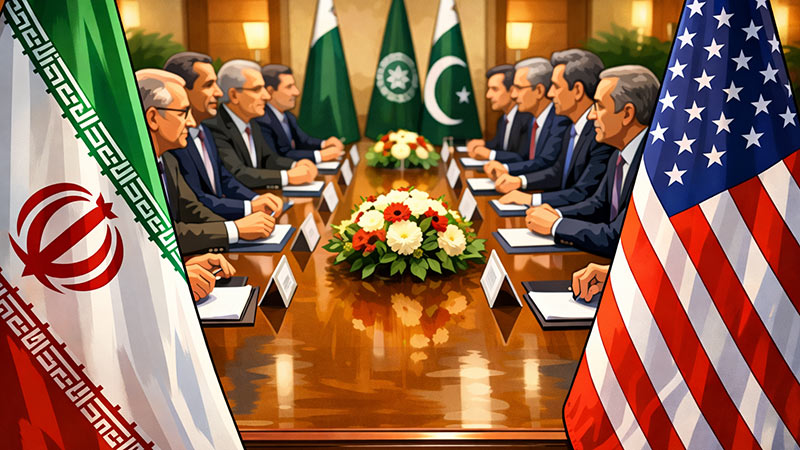
AI-generated image
U.S.-Iran talks in Pakistan end without deal, putting a fragile two-week ceasefire at risk.
U.S. Vice President JD Vance said on Sunday (April 12), that his team was leaving Pakistan after 21 hours of negotiations with Iran without reaching an agreement.
Speaking to reporters after the talks ended, Vance said the failure was worse for Iran than for the United States. He said Washington had made its red lines clear and accused Tehran of refusing to accept key American terms.
Vance said the main U.S. demand was a clear promise from Iran that it would not seek a nuclear weapon or the tools needed to quickly build one. He said that goal had guided the negotiations from the start.
Soon after his remarks, Vance waved goodbye from the top of the stairs before boarding Air Force Two in Islamabad.
Iran gave a different account of why the talks failed. The semi-official Tasnim news agency said “excessive” U.S. demands blocked an agreement. Earlier, before Vance spoke, Iran’s government said on X that negotiations would continue and that technical experts from both sides would exchange documents.
The meeting in Islamabad was the first direct U.S.-Iran talks in more than a decade. It was also the highest-level contact between the two countries since Iran’s 1979 Islamic Revolution.
Vance did not mention any plan to reopen the Strait of Hormuz, a key shipping route for about 20% of global energy supplies that Iran has blocked since the war began. The conflict has pushed oil prices sharply higher and killed thousands of people.
The U.S. delegation included special envoy Steve Witkoff and Jared Kushner, President Donald Trump’s son-in-law. Vance said he spoke with Trump between six and 12 times during the negotiations.
Iran’s delegation included Parliamentary Speaker Mohammad Baqer Qalibaf and Foreign Minister Abbas Araqchi.
The Iranian team arrived on Friday (April 10), wearing black to mourn late Supreme Leader Ayatollah Ali Khamenei and others killed in the war.
The Iranian government said the delegation also carried shoes and bags belonging to students killed in a U.S. bombing of a school next to a military compound.
The Pentagon says the strike is under investigation, while Reuters has reported that military investigators believe the U.S. was likely responsible.