

Sri Lanka reaffirms neutrality amid global crisis, moves to secure energy supply
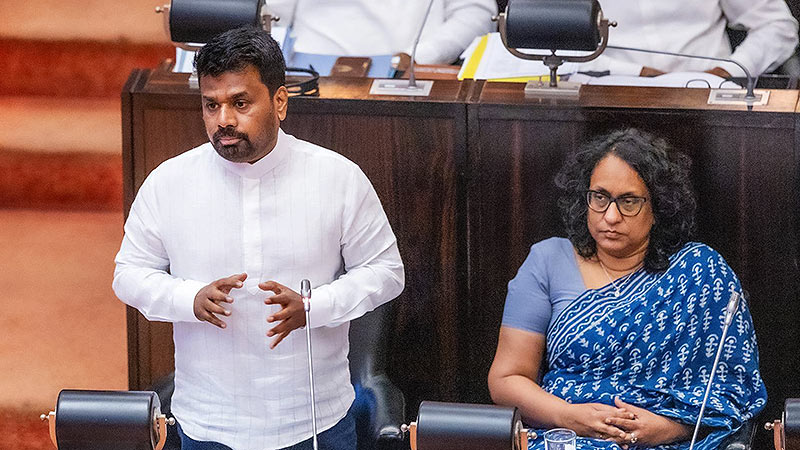
Sri Lankan President Anura Kumara Dissanayake today told Parliament that the country will firmly maintain its neutrality in the ongoing Middle East conflict, while taking urgent steps to manage rising fuel prices and potential supply disruptions.
Speaking during a special parliamentary debate, the President stressed that neutrality is essential to protect Sri Lanka’s dignity and international standing.
Neutral stance on global conflict
He rejected claims that Sri Lanka had sided with any country, calling such allegations “baseless.” The government, he said, had refused requests from both Iran and the United States for military-related access earlier this month to avoid being drawn into the conflict.
This included denying:
- A request from Iran to allow naval vessels to visit Sri Lanka
- A request from the United States to land military aircraft at Mattala Airport
“These decisions were taken to safeguard neutrality and prevent the conflict from reaching our region,” he said.
Humanitarian response despite tensions
Despite maintaining neutrality, Sri Lanka carried out humanitarian operations after an attack on an Iranian vessel near its maritime boundary.
Security forces rescued survivors and recovered casualties, bringing:
- 32 injured individuals ashore for treatment
- 84 bodies recovered from the sea
The government also provided medical care and temporary shelter to affected naval personnel, while ensuring they remained under controlled conditions.
The President emphasized that such actions reflect Sri Lanka’s commitment to international law and humanitarian principles.
Fuel supply concerns and global impact
A major focus of the speech was the impact of the Middle East conflict on Sri Lanka’s energy sector.
The President warned that the crisis is an “external shock” affecting:
- Fuel and gas supply chains
- Foreign exchange earnings, especially from workers in the Middle East
Sri Lanka is already facing delays in crude oil shipments, including:
- Two expected shipments of 90,000 metric tonnes each
- Additional petrol and diesel shipments postponed
To manage this, the government has:
- Issued new tenders for fuel imports
- Secured deliveries of diesel, petrol, aviation fuel, and furnace oil in April
- Explored alternative suppliers and government-to-government agreements
However, no supplier has yet agreed to provide crude oil in April, though one shipment is expected in June.
Rising fuel prices unavoidable
The President said global fuel prices have sharply increased due to the conflict, noting:
- Crude oil prices rising from $81 to $114
- Petrol and diesel prices increasing by up to 74% internationally
He explained that in Sri Lanka:
- A $1 increase in oil raises local prices by about Rs. 2
- Fuel price hikes are mainly driven by global markets, not currency depreciation
He warned that a decision on fuel pricing must be taken soon, as private suppliers are unwilling to operate at a loss.
Measures to prevent shortages
To avoid a crisis similar to past shortages, the government has:
- Introduced a QR-based fuel distribution system
- Taken action against hoarding and black-market activities
- Allowed private companies to supply fuel to export industries
Authorities are also carefully managing port capacity to ensure continuous fuel deliveries without delays.
Targeted relief under consideration
While acknowledging the burden on the public, the President said broad fuel subsidies are difficult due to fiscal constraints.
Instead, the government is considering targeted assistance for:
- Fishermen
- Key sectors in the formal economy
However, he noted challenges in supporting the large informal sector due to lack of data.
Gas supply and anti-cartel measures
The President assured that gas supplies for March and April are secured, though temporary shortages may occur due to supply adjustments.
He also revealed efforts to dismantle long-standing cartels in fuel, gas, and other sectors, accusing them of spreading misinformation to create panic.
Economic outlook and preparedness
Despite current challenges, the President highlighted strong economic progress in 2025, including:
- Budget deficit reduced to 2.4%
- Current account surplus of $1.8 billion
- Increased government revenue
He said Sri Lanka is better prepared to face external shocks compared to previous years.
Public urged to cooperate
In conclusion, the President acknowledged that uncertainties remain but assured that the government is working continuously to maintain supply chains and economic stability.
He called on the public to support these efforts, warning that while disruptions and price increases may occur, measures are in place to manage the situation effectively.